
The Easiest Way to Grow Tomatoes in Pots (Even in a Small Apartment)
Growing tomatoes in pots is one of the most rewarding things you can do with a sunny balcony or windowsill — even with zero garden space.
Here’s the quick version of what works:
- Use a large container — at least 15–20 gallons for best results
- Pick a compact (determinate) variety — like Tiny Tim, Bush Early Girl, or Patio Princess
- Get 6–8 hours of direct sun daily — a south-facing balcony is ideal
- Water consistently — containers dry out fast, sometimes needing water daily in summer heat
- Feed regularly — tomatoes are heavy feeders and need fertilizer every 1–2 weeks once fruiting starts
- Add support early — a cage or stake at planting time prevents root damage later
That’s the core of it. But if you want juicy, flavorful tomatoes instead of just technically alive plants, the details really matter.
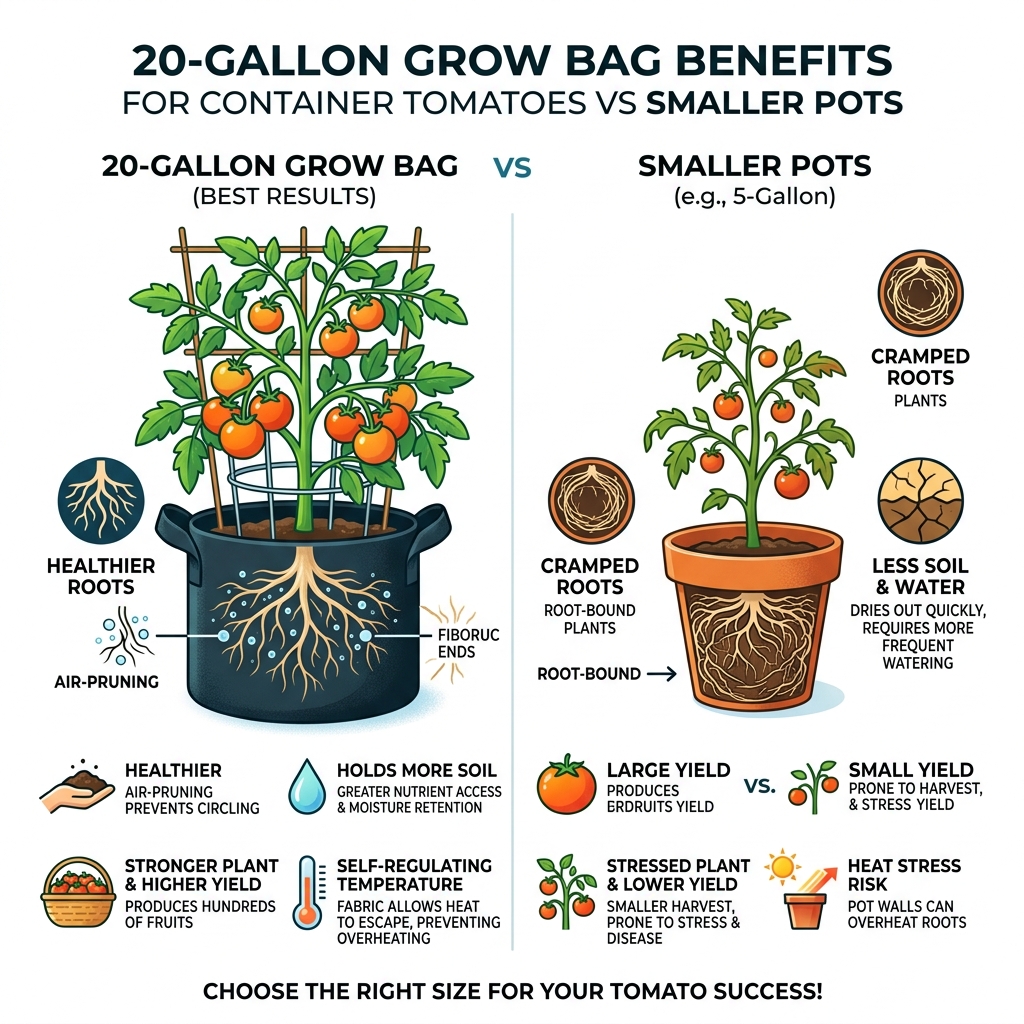
Container tomatoes behave very differently from in-ground plants. They dry out faster, run out of nutrients quicker, and need more attention to watering and feeding. The good news? A 20-gallon grow bag fixes most of those problems before they start — holding more soil, draining well, and air-pruning roots naturally for a healthier plant.
The payoff is real. A single healthy cherry tomato plant can produce hundreds of fruits over a season. Even a compact variety like Bush Early Girl can yield up to 20 pounds of tomatoes from one pot.
Essential Gear to Grow Tomatoes in Pots Successfully
To grow tomatoes in pots successfully, we have to start with the right hardware. Many beginners make the mistake of choosing a pot that is aesthetically pleasing but functionally too small. A tomato plant is essentially a “lazy, rambling vine” with a massive root system. If the roots are cramped, the plant becomes stressed, weak, and susceptible to disease.
The Power of the 20-Gallon Grow Bag
While a 5-gallon bucket is often cited as the minimum, research shows that larger pots—specifically those between 15 and 20 gallons—produce significantly bigger plants and more fruit. A 20-gallon storage container or fabric grow bag provides the soil volume needed for moisture retention and root expansion.
Fabric pots are particularly excellent because they offer superior aeration. In a traditional plastic pot, roots can become “root-bound,” circling the edges of the container. In a fabric bag, the roots are “air-pruned” when they reach the edge, encouraging the plant to grow a dense, fibrous root system that absorbs nutrients more efficiently.
Choosing Your Container
When selecting your gear, consider the following:
- Drainage: This is non-negotiable. If using plastic or wood, you must drill 10–12 quarter-inch drainage holes in the bottom. Fabric pots naturally drain through the material.
- Material: Avoid black plastic in very hot climates (like the Deep South or Southwest), as it can overheat the soil and cook the roots.
- Stability: Large plants get heavy. A 15-gallon nursery container or a 20-gallon bag provides a wide base that won’t tip over in a summer storm.
For more on selecting the right housing for your greenery, check out our guide on the best pots for indoor plants.
The Perfect Potting Mix
Never use garden soil in a pot. It is too heavy, will compact quickly, and may contain soil-borne diseases. Instead, use a high-quality, soilless potting mix. These mixes are lightweight, sterile, and designed to hold moisture while allowing air to reach the roots.
A great DIY recipe for a 20-gallon container includes:
- 5 gallons of coarse vermiculite
- 5 gallons of coconut coir (or peat moss)
- 8 gallons of high-quality compost
This mix ensures your effort to grow tomatoes in pots isn’t hampered by “wet feet” or soil compaction. For more soil science, see our breakdown of the best soil for indoor plants.
| Feature | Plastic Pots | Fabric Grow Bags |
|---|---|---|
| Drainage | Requires drilled holes | Excellent natural drainage |
| Root Health | Roots may circle (root-bound) | Air-prunes roots for better health |
| Temperature | Can overheat in direct sun | Breathable; stays cooler |
| Durability | Lasts many seasons | Usually lasts 2–4 seasons |

Choosing the Right Variety for Small Spaces
One of the biggest secrets to a successful harvest is picking the right “architectural” style of tomato. Tomatoes are categorized into two main groups: Determinate and Indeterminate.
Determinate vs. Indeterminate
- Determinate (Bush Types): These grow to a certain height (usually 2–4 feet), blossom, and produce all their fruit within a short window. They are the gold standard for container gardening because they stay compact and manageable.
- Indeterminate (Vining Types): These are the “marathon runners” of the tomato world. They will keep growing—sometimes up to 10 or 15 feet—until the frost kills them. They produce fruit continuously throughout the season. While they can be grown in 20-gallon bags, they require massive support structures and constant “topping” to keep them from taking over your balcony.
Understanding these growth habits is a key part of our indoor plant growth tips.
Best Determinate Varieties to Grow Tomatoes in Pots
If you are working with limited space, we highly recommend these varieties:
- Bush Early Girl: A “truly excellent” variety that produces 6–7 ounce fruits and can yield up to 20 pounds per plant.
- Patio Princess: Very compact and perfect for smaller 5–10 gallon pots if you can’t fit a 20-gallon bag.
- Tiny Tim: A dwarf variety that only grows about 12–18 inches tall—perfect for window boxes.
- Celebrity: A classic determinate that produces large, sandwich-sized tomatoes on a sturdy bush.
Managing Indeterminate Vines in Large Containers
If you have your heart set on a vining heirloom like a Sun Sugar cherry tomato, you must use a 20-gallon bag. These plants develop massive root systems. To keep them under control:
- Top the plant: Once it reaches the top of your support (usually 5–6 feet), snip off the main growing tip. This forces the plant to put energy into ripening existing fruit rather than growing more leaves.
- Heavy Feeding: Because they grow for a longer season, they will deplete the nutrients in a pot faster than bush types.
Step-by-Step: Planting and Sunlight Requirements
Once you have your 20-gallon bag and your seedling, it’s time to get dirty. The way you plant a tomato is different from almost any other vegetable.
The Deep Plant Technique
Tomatoes have a “superpower”: they can grow roots all along their stems. When transplanting your seedling, we recommend burying it deep—up to the first set of true leaves. You can even remove the bottom few sets of leaves and bury two-thirds of the stem. This creates a massive, sturdy root system that can support a heavy fruit load later.
Sunlight: The Fuel for Fruit
Tomatoes are sun-worshippers. To grow tomatoes in pots that actually taste like summer, you need at least 6 to 8 hours of direct sun per day.
- Southern Exposure: This is usually the best spot for a balcony.
- Heat Management: If you live in an extremely hot climate, afternoon shade can prevent the fruit from “sunscald” or the roots from overheating.
- Reflected Heat: Be careful with concrete or asphalt balconies; they can reflect intense heat. Grouping pots together can help shade the root zones of the plants.
Check out our indoor plant sunlight requirements for more on positioning your plants.
Hardening Off and Timing
Don’t rush your plants outside. Tomatoes are tropical plants that hate the cold. Wait until nighttime temperatures are consistently above 50°F–55°F. Before moving them permanently, “harden them off” by placing them outside for an hour the first day, two hours the second, and so on, over the course of a week. This prevents transplant shock. For more on moving plants, see our guide on repotting indoor air-purifying plants.
If a surprise frost is predicted, swaddle your pots in burlap or a frost blanket. This is a crucial part of seasonal care for houseplants and outdoor containers alike.
Maintenance: Watering, Feeding, and Support
Now that your tomato is in its 20-gallon home, the “set-it-and-forget-it” phase begins—but you can’t actually forget it!
How to Water and Support Your Effort to Grow Tomatoes in Pots
Watering is the most common area where gardeners fail. In a pot, moisture evaporates quickly. During the peak of summer, a large tomato plant may need water twice a day.
The Finger Test: Stick your finger an inch into the soil. If it feels dry, water it. Pro Tip: Always water the soil, not the leaves. Wet leaves are an invitation for fungal diseases like blight. Using a watering wand can help you reach the base of the plant without wetting the foliage. This is a common theme in our indoor plant watering mistakes guide.
Support Structures
Do not wait until the plant is falling over to add support. Install your cage or stake immediately after planting. This prevents you from driving a stake through the roots later.
- Cages: For indeterminate varieties, we recommend a heavy-duty 54-inch cage.
- Stakes: You can reinforce cages with 6-foot bamboo stakes secured with cable ties for extra stability against the wind.
- Trellising: If you have a balcony railing, you can use soft cloth scraps or bungee cords to tie the plant to the rail.
Fertilizing for Flavor
Tomatoes are “heavy feeders.” They need a lot of fuel to produce those sugars.
- At Planting: Mix a slow-release, pelleted fertilizer (like a 10-10-10) into the soil.
- Once Flowering Starts: Switch to a high-potassium soluble fertilizer (like a 9-15-30). Potassium is the secret ingredient for flavor and fruit development.
- Frequency: Feed with a liquid fertilizer every 10–14 days.
For a deeper dive into NPK ratios, visit our indoor plant fertilizing guide.
Preventing Disease and Common Mistakes
Even in a 20-gallon bag, things can go wrong. Here is how to handle the most common “apartment garden” hurdles.
Blossom End Rot
If the bottom of your tomato turns black and leathery, you have Blossom End Rot. This isn’t a disease; it’s a calcium deficiency usually caused by inconsistent watering. When the soil dries out completely and then gets soaked, the plant can’t move calcium to the fruit properly. Keeping the soil consistently moist (and perhaps adding a tablespoon of Epsom salt or crushed eggshells at planting) can help prevent this.
Pests: The Hornworm Menace
Even on a high-rise balcony, pests like the Tomato Hornworm can find you. These large green caterpillars can strip a plant of its leaves in a single night.
- The Solution: Hand-pick them and drop them in soapy water.
- Natural Control: Use neem oil once a week or sprinkle cayenne pepper around the base of the plant to deter critters. Our indoor plant pest control naturally guide has more chemical-free tips.
Pruning for Health
For determinate (bush) types, you don’t need to do much pruning. However, for all varieties, it is a good idea to remove the leaves at the very bottom of the plant (the “skirts”). This improves air circulation and prevents soil-borne pathogens from splashing onto the leaves. For more on the “snip-snip” science, see our pruning tips for houseplants.
Mulching
Adding a 2-inch layer of mulch (shredded leaves, straw, or even shredded paper) to the top of your 20-gallon bag is a game-changer. It regulates soil temperature and keeps moisture from evaporating, which is vital for tips for healthy houseplants and vegetables.
Frequently Asked Questions about Container Tomatoes
What size pot is best for indeterminate tomatoes?
For indeterminate (vining) varieties, we strongly recommend a 20-gallon container or a large fabric grow bag. These plants can grow 10 feet tall and have root systems to match. A 24-inch diameter pot provides the necessary stability to keep the plant from blowing over in the wind and enough soil volume to prevent the plant from wilting every two hours in the sun.
How often should I fertilize tomatoes in pots?
Since nutrients leach out of pots every time you water, you need to fertilize more often than you would in a garden. We suggest a liquid, high-potassium fertilizer every 10 to 14 days once the first tiny green fruits appear. Before that, a balanced slow-release fertilizer at planting time is usually enough to get the foliage established.
Can I reuse potting soil for tomatoes next year?
It is tempting, but risky. Tomatoes are prone to soil-borne diseases like wilt and Septoria leaf spot. If your plants were 100% healthy, you can reuse the soil if you amend it with fresh compost and fertilizer. However, the safest bet is to start with fresh, sterile mix each year. If you do reuse the pot, be sure to sterilize it with a 1-part-bleach to 10-parts-water solution first.
Conclusion
At FinanceBillX, we believe that everyone should have the chance to bite into a sun-warmed tomato they grew themselves. Whether you are starting with easy-care indoor plants for beginners or diving straight into 20-gallon grow bags, the principles are the same: give the plant what it needs, and it will reward you.
By choosing the right variety, providing a massive 20-gallon home, and keeping up with the water and sun, you can turn a tiny apartment balcony into a high-yielding urban farm. If you’re looking for something even simpler to start your green journey, check out our list of low-maintenance indoor plants.
Happy gardening, and enjoy that summer harvest!
