
Can Ferns Really Thrive in Dark Rooms?
Ferns for dark rooms are absolutely a real thing — and several varieties handle low light surprisingly well.
Here are the best ferns for dim indoor spaces:
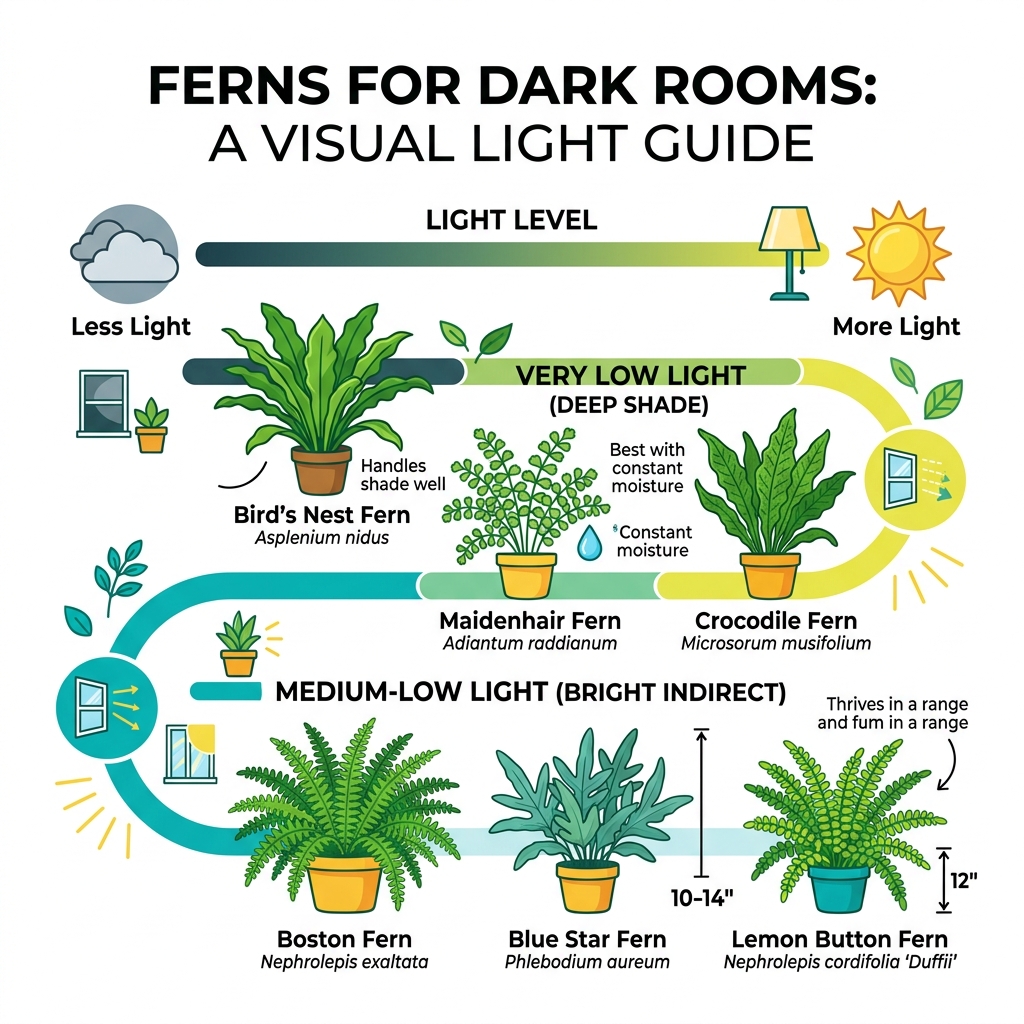
- Boston Fern (Nephrolepis exaltata) – tolerates low to indirect light; lush and full
- Blue Star Fern (Phlebodium aureum) – low to medium light; compact at 10-14 inches tall
- Lemon Button Fern (Nephrolepis cordifolia ‘Duffii’) – thrives in low to bright indirect light; stays small at 12 inches
- Maidenhair Fern (Adiantum raddianum) – does well in low light; best with constant moisture
- Bird’s Nest Fern (Asplenium nidus) – handles shade well; bold, structural look
- Crocodile Fern (Microsorum musifolium) – shade-tolerant; striking textured leaves
If your apartment doesn’t get much sunlight, you’re not alone. Most urban spaces — especially those with north-facing windows or rooms set back from natural light — can feel like a plant graveyard.
But here’s the good news: ferns evolved on forest floors, where light is filtered, dappled, and often scarce. That’s exactly why so many fern species adapt well to the dim corners of a modern apartment.
That said, “low light” doesn’t mean no light. And not every fern handles shade equally. Some will slowly fade without enough brightness. Others will genuinely thrive with just a north-facing window and a little extra humidity.
This guide compares the top ferns for dark rooms so you can pick the right one — and actually keep it alive.
Selecting the Best Ferns for Dark Rooms
When we talk about an indoor jungle, we often picture sun-drenched solariums. However, we can achieve that same lush, prehistoric aesthetic in much dimmer environments by choosing the right species. Selecting ferns for dark rooms requires understanding that while all ferns love moisture, their tolerance for “the shadows” varies significantly.
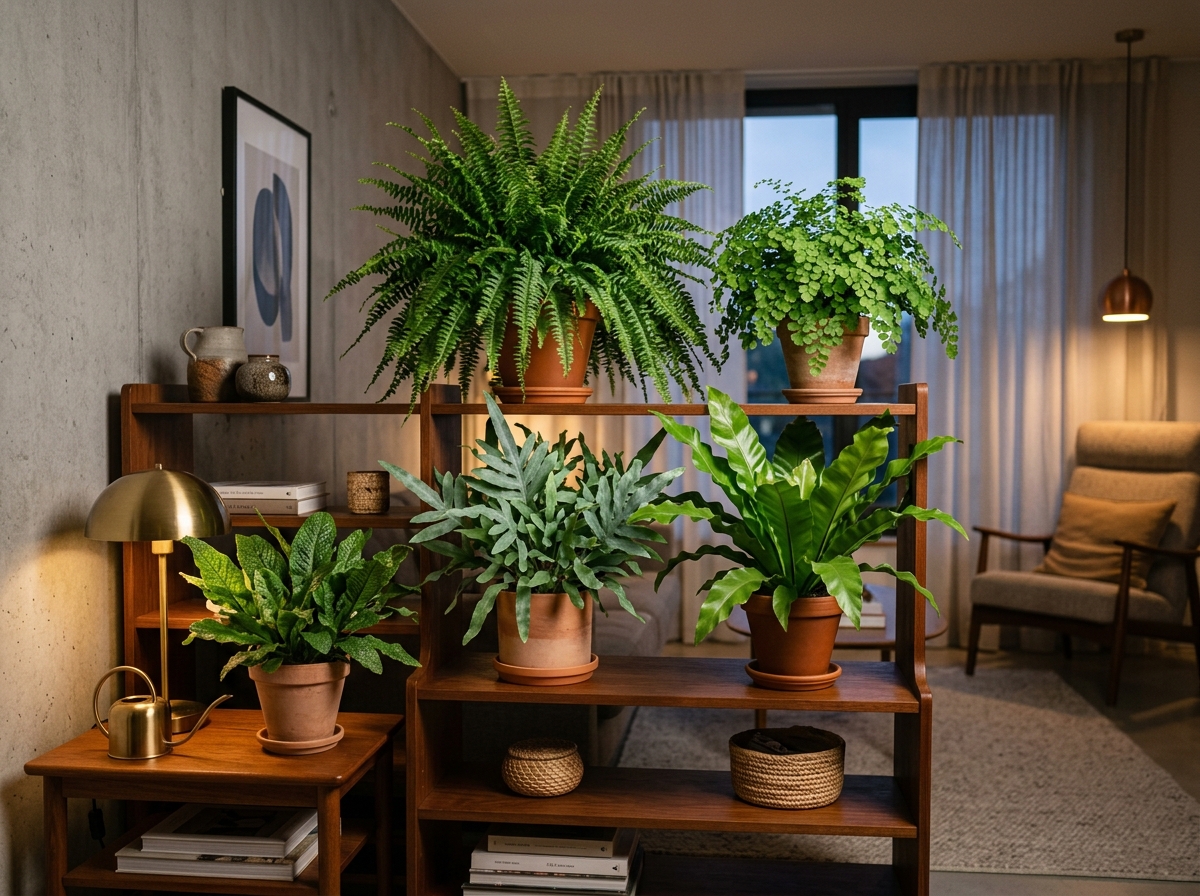
To help you decide which leafy companion fits your space, we’ve broken down the top contenders based on their size and light needs.
| Fern Variety | Average Size | Light Tolerance | Unique Feature |
|---|---|---|---|
| Boston Fern | 2-3 ft wide/tall | Low to Bright Indirect | Classic “Victorian” hanging look |
| Blue Star Fern | 10-14 inches tall | Low to Medium | Silvery-blue, elongated fronds |
| Silver Lady Fern | 2-3 ft tall | Bright Filtered/Shade | Miniature tree fern structure |
| Bird’s Nest Fern | 3-5 ft tall (max) | Shade Tolerant | Rippled, sword-like leaves |
| Crocodile Fern | 12-18 inches tall | Shade Tolerant | Texture resembles crocodile skin |
| Rabbit’s Foot Fern | 12-18 inches tall | Low to Bright Indirect | Fuzzy, creeping rhizomes |
The Classics: Boston and Blue Star
The Boston Fern is perhaps the most iconic indoor plant. While it prefers bright indirect light to stay truly “fluffy,” it is remarkably adaptable to lower light levels if you keep the humidity high. On the other hand, the Blue Star Fern is a rising star in the plant world. It typically stays between 10 and 14 inches tall, making it perfect for bookshelves or desks that don’t see much sun. Its glaucous, blue-green foliage provides a cool-toned contrast to the usual lime-green suspects.
The Structural Wonders
If you want something that looks like a miniature tree, the Silver Lady Fern (Blechnum gibbum) is an excellent choice. It thrives in shaded or semi-shaded areas and develops a small, scaly black trunk over time. For those who prefer bold textures, the Crocodile Fern (often priced around £10.99 to £15.00) features a puckered leaf surface that looks exactly like reptilian scales. It is exceptionally shade-tolerant and adds a unique “weird-but-cool” factor to any dim corner.
Unique and Hardy Options
Don’t overlook the Lepisorus bicolor (Hardy Ribbon Fern). This rhizomatous perennial is a slow grower that forms clumps of evergreen ribbons. While it is often used as ground cover in warmer climates, it makes for a fantastic, low-maintenance houseplant in cooler regions. It’s also worth checking out our indoor-plant-sunlight-requirements guide to see how these ferns compare to other low-light champions like the ZZ plant or Sansevieria.
Lemon Button Ferns for Dark Rooms
The Nephrolepis cordifolia ‘Duffii’, or Lemon Button Fern, is a personal favorite of ours. If you are a beginner looking for a plant that is both cute and resilient, this is the one. It typically grows to about 12 inches tall and wide, making it a “button-sized” version of its larger cousins.
What makes it special?
- Lemony Scent: When you brush against the foliage or crush a leaf, it emits a faint, refreshing citrus aroma.
- Golden-Green Foliage: Its small, rounded pinnae (leaflets) have a bright, cheery hue that lightens up dark rooms.
- Growth Habit: It stays compact and tidy, unlike the sprawling Boston fern.
Because it is so forgiving, we often include it in our list of easy-care-indoor-plants-for-beginners. It can handle low light quite well, though it won’t grow as quickly as it would in a brighter spot.
Maidenhair Ferns for Dark Rooms
The Adiantum raddianum, or Maidenhair Fern, is the “diva” of the fern world. It features delicate, fan-shaped fronds and wiry black stems that look stunning in a moody, low-light setting. While it technically does very well in low light, it has one non-negotiable demand: constant moisture.
If the soil dries out even once, the leaves will shrivel and turn crisp. For this reason, we highly recommend using self-watering pots for Maidenhair ferns. They also thrive in terrariums, where the enclosed environment keeps the humidity at a steady 60-80%. If you’re looking for low-maintenance-indoor-plants, the Maidenhair might not be your first choice, but its ethereal beauty is worth the extra effort of a daily misting or a pebble tray.
Essential Care and Maintenance for Shady Ferns
Growing ferns for dark rooms isn’t just about sticking them in a corner and forgetting them. In fact, because they aren’t getting much energy from the sun, their care needs to be more precise.
Humidity: The Secret Sauce
Most indoor ferns are native to tropical or semi-tropical regions where humidity is naturally high. In a dark room, the air can often become stagnant or dry. We recommend:
- Pebble Trays: Place your fern’s pot on a tray filled with pebbles and water. As the water evaporates, it creates a humid microclimate around the fronds.
- Misting: Daily misting helps, but it isn’t a substitute for a humidifier if your air is bone-dry.
- Grouping: Grouping several plants together allows them to share the moisture they release through transpiration.
Watering and Soil
In lower light, plants process water more slowly. A common mistake is watering on a strict schedule. Instead, feel the soil. For most ferns, you want the top inch of soil to feel like a wrung-out sponge—moist but not soggy.
For varieties like the Rumohra adiantiformis (Leather Fern), which has glossier, tougher fronds, you can afford to be a little more relaxed. These “leathery” types are often more drought-tolerant than their thin-leaved counterparts. Use a soil mix high in organic matter, such as a peat-free compost mixed with a bit of orchid bark or grit for drainage.
Temperature and Feeding
Keep your ferns in a stable environment between 60°F and 72°F (15°C–22°C). Protect them from cold drafts or heat vents, which can shock the plant. During the growing season (spring and summer), use a half-strength liquid fertilizer once a month. Over-fertilizing in a dark room can lead to salt buildup in the soil, which burns sensitive fern roots. For more tips on managing larger setups, see the-ultimate-guide-to-large-low-light-plants-for-lazy-gardeners.
Avoiding Common Mistakes in Dim Environments
Even the most shade-tolerant fern can struggle if the environment isn’t quite right. Here are the most common pitfalls we see:
- Overwatering in the Dark: Because there is less light, there is less evaporation. If you water a fern in a dark room as often as one in a sunny window, you risk root rot. Always check the soil moisture first!
- Sudden Sun Exposure: If you decide to “give your fern a tan” by moving it into direct sunlight for a day, you will likely cause leaf scald. Fern fronds are thin and burn easily.
- Ignoring Seasonal Changes: In winter, “low light” becomes “no light.” You may need to move your ferns closer to a window or supplement with a small LED grow light during the darkest months.
- Misidentifying the Plant: Some plants marketed as ferns aren’t ferns at all. For example, the Asparagus Fern is actually related to lilies, and the “Black Fern Arum” is actually a ZZ Raven. While these are great for dark rooms, their care is very different (they prefer to dry out completely).
- Choosing the Wrong Variety for the Spot: Not all ferns are created equal. While the Athyrium niponicum var. pictum (Japanese Painted Fern) is incredibly shade-tolerant, it is a deciduous outdoor fern that needs a cold dormant period. It will not survive long-term as a year-round indoor houseplant. Stick to tropical varieties for indoor success.
Frequently Asked Questions about Low-Light Ferns
How much light is truly “low light” for an indoor fern?
In technical terms, low light is usually defined as 50 to 250 foot-candles (or roughly 500 to 2,500 lux). In practical terms, if you can’t comfortably read a book in the room during midday without turning on a lamp, it might be too dark even for a fern. A north-facing window or a spot 10 feet away from a bright east-facing window is usually the “sweet spot” for ferns for dark rooms.
Can ferns survive in a room with no windows?
No plant can survive forever in total darkness. Plants need light for photosynthesis. If your room has no windows (like a windowless bathroom), you will need to leave a light on for 8-12 hours a day or use a dedicated grow light. Some ferns, like the Bird’s Nest Fern, are more resilient to “near-dark” conditions, but they will eventually stop growing and fade without some light source.
Why are my fern’s leaves turning brown in a dark room?
Brown tips usually indicate low humidity or chemicals in tap water (ferns can be sensitive to chlorine). However, if the whole frond is turning yellow or brown and mushy, it’s likely a sign of overwatering—a common issue in dim spaces where soil stays wet for too long.
Conclusion
At FinanceBillX, we believe that every home deserves a touch of nature, regardless of how much sunlight it receives. Ferns are the perfect solution for bringing life into those neglected, shadowy corners of your apartment or office. By selecting shade-tolerant varieties like the Lemon Button or Blue Star Fern, and maintaining the right balance of humidity and moisture, you can create a thriving indoor sanctuary.
If you’re ready to transform your space, the key to success is observation. Watch your plants, adjust your watering, and don’t be afraid to move them a few inches closer to the light if they seem unhappy. For more expert advice on greening your home, check out More info about indoor plant services and let us help you grow your best indoor jungle yet.
