
Your Balcony Deserves Green Without the Stress
The best low maintenance balcony plants for most gardeners are:
| Plant | Sun Needs | Water Frequency | Best For |
|---|---|---|---|
| Succulents (Echeveria, Jade) | 6+ hours | Once a month | Hot, dry balconies |
| Calibrachoa (Million Bells) | 6-8 hours | Regular, moist | Color and trailing blooms |
| Aloe Vera | Full sun | When soil is dry | Multi-purpose, beginner-friendly |
| Pothos | Indirect light | Once a week | Shady balconies |
| Lavender | Full sun | Low | Fragrance, drought tolerance |
| Spider Plant | Indirect light | Moderate | Low light, air purifying |
| Kalanchoe | Part sun/shade | Very little | Year-round color |
| Strawberries | Full sun | Once a week | Edible, compact |
You don’t need a backyard to have a thriving green space. A balcony — even a small one — can be a calming, plant-filled retreat.
But most people give up early. They buy the wrong plants, overwater them, or watch pests take over. Sound familiar?
The good news: the right plant choices make almost all of that go away. Many plants are genuinely hard to kill, need watering only occasionally, and shrug off most pest pressure naturally.
California’s climate makes this even easier. Mild temperatures year-round mean many balcony plants thrive with almost no intervention — especially succulents, herbs, and drought-tolerant flowering plants.
This guide covers the best low-maintenance picks, how to set up your space, and how to keep everything alive without stress.
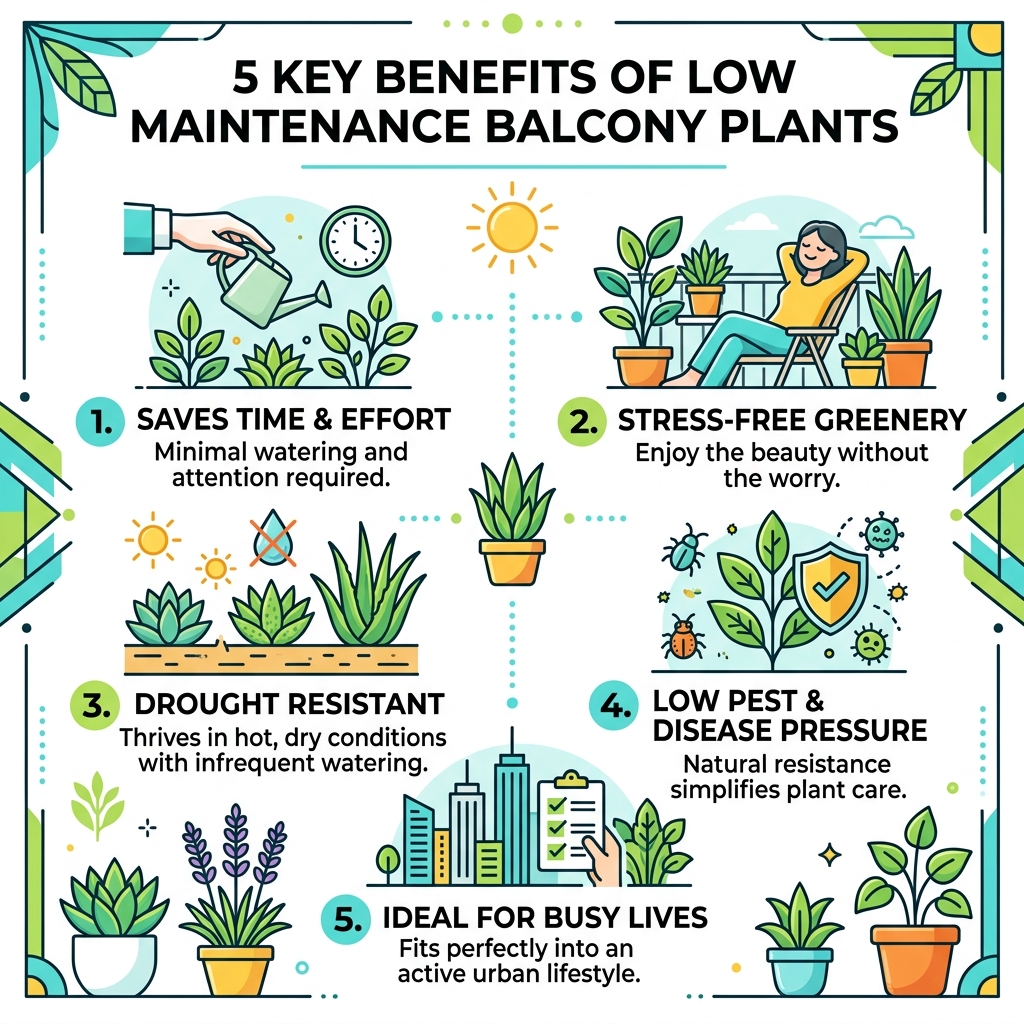
What Defines the Best Low Maintenance Balcony Plants?
When we talk about low maintenance balcony plants, we aren’t just talking about plants that “don’t die.” We are looking for specific traits that allow these plants to thrive in the unique, often harsh environment of an elevated outdoor space.
A true low-maintenance champion usually possesses three main qualities: drought tolerance, self-cleaning abilities, and natural pest resistance. On a balcony, plants are often exposed to more wind and higher evaporation rates than those in the ground. Therefore, a plant that can go a week (or a month, in the case of succulents) without a drink is a lifesaver for a busy urbanite.
Furthermore, we love “self-cleaning” plants. These are varieties like Calibrachoa that drop their spent blooms naturally, meaning you don’t have to spend your Saturday morning “deadheading” or snipping off old flowers to keep the plant looking fresh.
Understanding your microclimate is also vital. A fourth-floor balcony facing south in San Diego is a completely different world than a shaded, wind-swept balcony in San Francisco. Before you buy, observe how many hours of direct sun your space gets. For more in-depth advice on keeping your greenery thriving, check out our tips for healthy houseplants which apply beautifully to many container-bound outdoor plants as well.
| Feature | Sun-Loving Species | Shade-Tolerant Species |
|---|---|---|
| Light Needs | 6-8+ hours direct sun | 2-4 hours or filtered light |
| Water Needs | High (due to evaporation) | Moderate to Low |
| Wind Resistance | High (often thicker leaves) | Moderate (delicate leaves) |
| Examples | Succulents, Lavender, Lantana | Pothos, Boston Fern, Hostas |
Top Flowering Picks: Million Bells and Beyond
If you want a splash of color without the constant upkeep of traditional roses or finicky annuals, you need to meet the Calibrachoa. Often sold under the name “Million Bells,” these plants are the undisputed royalty of the balcony.
Calibrachoa: The Continuous Bloomer
According to the Million Bells Care and Growth Guide, these plants are prized for their “self-cleaning” nature. They produce hundreds of small, petunia-like flowers from spring until the first frost. Because they are day-neutral, they don’t stop blooming just because the days get shorter.
They are perfect “spillers,” meaning they will cascade beautifully over the side of a railing basket. While they do need regular watering—sometimes daily during a California heatwave—they are incredibly vigorous. If they start to look a bit leggy mid-summer, just give them a quick trim, and they’ll bounce back with even more blooms.
Kalanchoe: The Winter Warrior
For those who want color during the cooler months, the Kalanchoe blossfeldiana plant profile highlights a plant that is nearly indestructible. Native to Africa, this succulent-like flowering plant needs very little water and only one light application of fertilizer per year. It produces clusters of vibrant red, orange, or yellow flowers that can last for weeks. It’s a perfect choice for California balconies where frost is rare, providing much-needed winter interest when other plants are dormant.

Hardy Succulents and Edibles for California Balconies
California’s diverse climate—from the salty air of the coast to the dry heat of the inland valleys—is succulent heaven. These are the ultimate low maintenance balcony plants because they store water in their leaves, allowing them to survive even if you forget about them for a few weeks.
Succulent Varieties as Low Maintenance Balcony Plants
The Jade plant and Aloe Vera are the “old faithfuls” of the succulent world. They are incredibly resilient and can handle the intense indoor plant sunlight requirements often found on west-facing balconies.
One of our favorite unique picks is Aptenia cordifolia, also known as Baby Sunrose. As noted in the Aptenia cordifolia research and facts, this plant is a high-performance groundcover that trails beautifully in pots. It has heart-shaped, succulent leaves and bright red flowers that open in the sun. It is particularly salt-tolerant, making it a “must-have” for coastal apartment dwellers.
Easy Edibles: Herbs and Strawberries
Who says low maintenance can’t be delicious? Many Mediterranean herbs like Rosemary, Lavender, and Sage thrive on neglect. They actually prefer to dry out between waterings and love the intense sun of a balcony.
Strawberries are another fantastic choice. Ever-bearing varieties can produce fruit almost all year in mild California weather. They are compact, making them ideal for vertical gardening or hanging pots where slugs (the strawberry’s arch-nemesis) can’t reach them. Just be sure to avoid common indoor plant watering mistakes like getting the leaves wet, which can lead to fungal issues. Aim for the soil instead!
Essential Setup: Containers, Soil, and Space Saving
To set your low maintenance balcony plants up for success, you need the right foundation. You can’t just use any old dirt or a heavy ceramic pot without considering the logistics of balcony life.
Optimizing Small Spaces
Weight is a major factor for balconies. Instead of heavy terracotta or stone, we recommend fiberglass pots or fabric grow bags. Fabric bags are breathable, which prevents root rot, and they are incredibly lightweight. When choosing your containers, consult our guide on the best pots for indoor plants to understand how different materials affect moisture retention.
Standard garden soil is too heavy and doesn’t drain well enough for pots. You should always use a high-quality potting mix. You can find more details in our breakdown of the best soil for indoor plants. Ensure every pot has drainage holes; otherwise, your low-maintenance dream will quickly turn into a soggy nightmare.
Managing Balcony Specific Challenges
Balconies face unique hurdles:
- Wind: High-rise winds can shred delicate leaves. Use sturdy plants like ornamental grasses or dwarf olive trees as “windbreaks” for your more fragile flowers.
- Reflected Heat: Concrete and glass can bounce heat onto your plants, cooking them. Succulents handle this best.
- Pests: Aphids and tobacco budworms can occasionally drop by. A simple blast of water or a spray of neem oil usually does the trick.
- Air Quality: Many balcony plants act as a filter. For a deep dive into this benefit, read about balcony gardens: the ultimate air-purifying setup.
To manage humidity in these exposed areas, especially for tropicals like Spider Plants, our indoor plant humidity guide offers great tips on grouping plants together to create a humid microclimate.
Frequently Asked Questions about Balcony Gardening
Which plants can handle high-rise winds?
If you are high up, you need “tough” plants. Ornamental grasses are excellent because they flex with the wind rather than breaking. Dwarf olive trees and woody herbs like Rosemary are also very wind-resistant. Avoid tall, top-heavy plants that might blow over; instead, use low-profile containers or secure your pots to the railing.
How often should I water potted balcony plants?
There is no one-size-fits-all answer, but a good rule of thumb is the “knuckle test.” Stick your finger into the soil up to the second knuckle. If it feels dry, water it. On a windy, hot day, a pot might need water daily. On a cool, overcast day, it might go a week. For those who travel, self-watering pots are a game-changer. If you’re a total beginner, start with easy-care indoor plants for beginners to get a feel for watering rhythms.
Are there low-maintenance plants for shady balconies?
Absolutely! If your balcony faces north or is blocked by other buildings, go for “foliage first.” Boston Ferns, Pothos, and Spider Plants thrive in indirect light. Pothos is particularly great because it can climb a trellis or trail from a high shelf, filling the space with green without needing a single ray of direct sun. You can find more shade-friendly ideas in our list of low-maintenance indoor plants.
Conclusion
Creating a “tower of Zen” on your balcony doesn’t have to be a full-time job. By choosing low maintenance balcony plants like succulents, Calibrachoa, and hardy herbs, you can enjoy a lush, vibrant outdoor space with only a few minutes of care each week.
At FinanceBillX, we believe that sustainable urban living starts with making the most of the space you have. Whether you are looking to purify your air, grow your own snacks, or just find a place to relax with a cup of coffee, a balcony garden is a perfect investment in your well-being.
Ready to transform your space? Use the tips in this guide to start your balcony garden today and enjoy the stress-free greenery you deserve.
