
Why It’s So Hard to Get Rid of Fungus Gnats (And How to Actually Do It)
If you want to get rid of fungus gnats fast, here’s what works:
- Let the topsoil dry out – stop watering until the top 1-2 inches of soil are completely dry
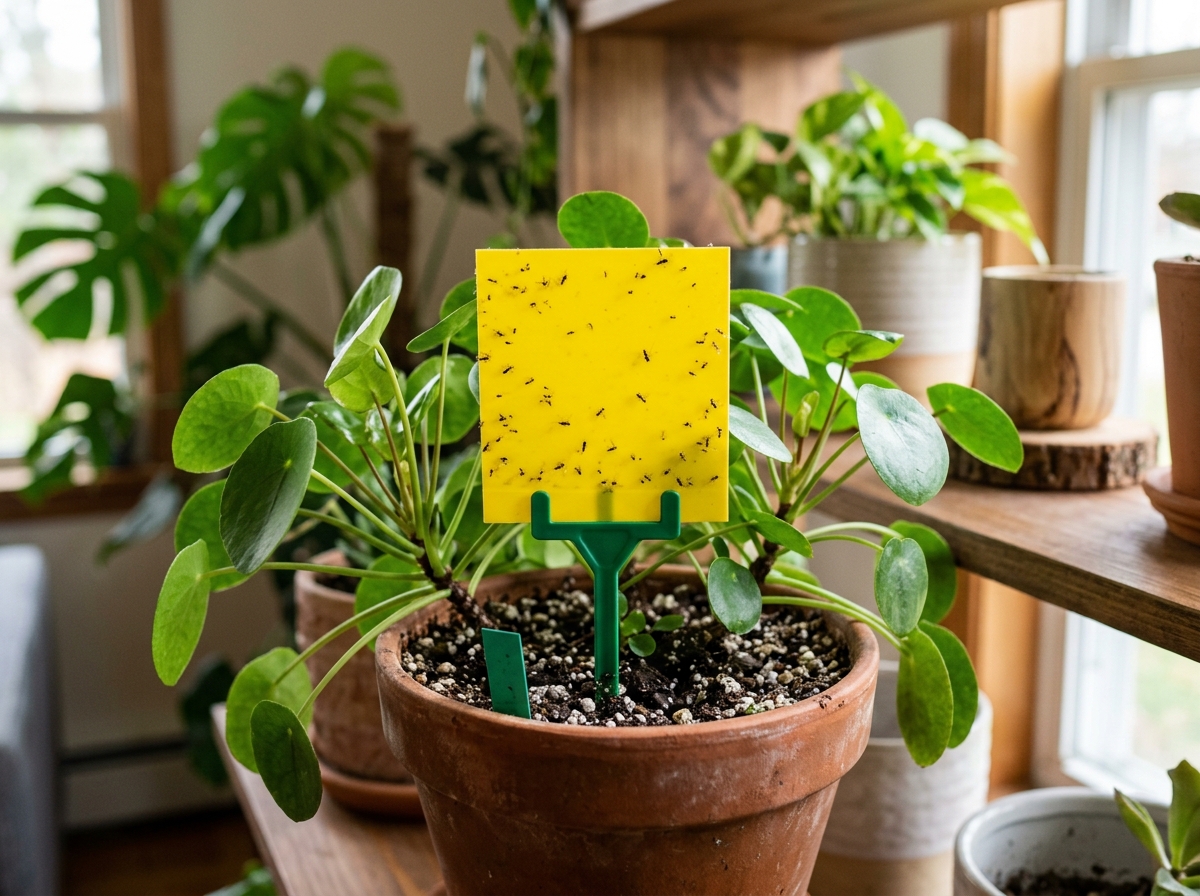
- Use yellow sticky traps – place them flat on the soil to catch adult gnats
- Apply BTI (Mosquito Bits) – soak in water, then drench the soil to kill larvae
- Try diluted hydrogen peroxide – mix 1 part 3% H₂O₂ with 4 parts water, apply to soil
- Top-dress with sand or gravel – creates a physical barrier that stops egg-laying
You need to tackle both adults and larvae at the same time – that’s the key.
You’re watering your monstera, and a tiny cloud of black flies erupts from the soil. Sound familiar?
Fungus gnats are one of the most common – and most frustrating – pests for indoor plant lovers. They look like miniature mosquitoes, hover around your plants, and seem to multiply overnight no matter what you do.
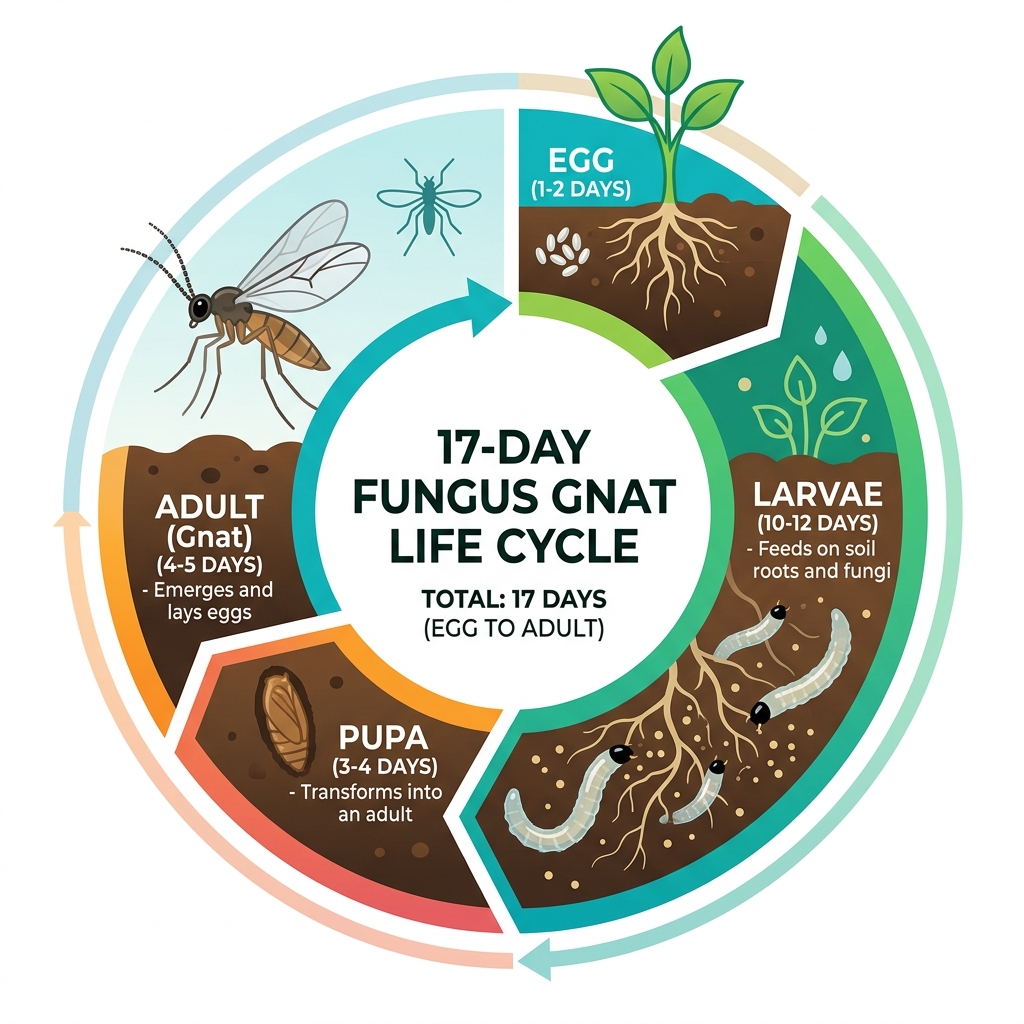
Here’s why they’re so hard to shake: a single female can lay up to 300 eggs in just one week. And in a warm apartment, a new generation can go from egg to adult in as little as 17 days. By the time you notice the adults flying around, there are already hundreds of larvae quietly feeding in your soil.
The good news? You don’t have to throw out your plants. With the right approach – targeting both the flying adults and the larvae hiding in your soil – you can break the cycle for good.
This guide walks you through exactly how to do that, step by step.
Understanding the Enemy: Identification and Life Cycle
Before we can effectively get rid fungus gnats, we need to know exactly what we are looking at. Many people mistake these pests for fruit flies. While they are similar in size (about 1/8 inch long), fungus gnats belong to the Bradysia species and have a few distinct features.
If you look closely at an adult gnat, you’ll notice they have long legs and segmented antennae that are longer than their heads, giving them a delicate, mosquito-like appearance. A key identification feature is the “Y-shaped” vein pattern on their clear or light gray forewings. Unlike fruit flies, which zip around your kitchen looking for old bananas, fungus gnats are weak fliers that tend to hang out near the soil surface or crawl along the rims of your pots.
The larvae are the real troublemakers. These tiny, worm-like creatures are translucent or whitish with a distinct, shiny black head capsule. They live in the top 2 to 3 inches of the growing medium, where they feed on fungi, algae, and decaying organic matter.
Why They Are Dangerous to Your Plants
While adult gnats are mostly just a nuisance—unless you count the risk of accidentally inhaling one while you’re talking to your fiddle leaf fig—the larvae can cause real damage. In a heavy infestation, they will stop eating fungus and start munching on your plant’s delicate root hairs.
According to Fungus Gnats as Houseplant and Indoor Pests | Colorado State University Extension, this root feeding can lead to:
- Wilting or poor growth
- Yellowing leaves
- Stunted development, especially in seedlings and young cuttings
The life cycle is incredibly rapid. At room temperatures (65°F to 75°F), a generation can be completed in just 3 to 4 weeks. If your home is warmer, that cycle can shrink to just 17 days. This means that if you only kill the adults, a new batch of “soil teenagers” will emerge just a few days later to continue the cycle. To learn more about the biology of these pests, you can check out the Fungus Gnats / Home and Landscape / UC Statewide IPM Program (UC IPM) for detailed scientific insights.
The Potato Test for Larvae Detection
Not sure if those flies are coming from your soil or just passing through? We recommend the “Potato Test.” This is a simple, low-tech way to monitor your soil for larvae without digging up your plants.
- Slice a raw potato: Cut a potato into 1/4-inch thick slices or wedges.
- Insert into soil: Press the slices about 1/2 inch into the soil surface of your pots.
- Wait 48 hours: Leave them there for about two days.
- Check for “guests”: Pull the potato slices out. If you have an infestation, the larvae will have migrated to the potato to feed.
This test is fantastic for determining which plants are the “hotspots” of the infestation so you can prioritize your treatment.
How to Get Rid of Fungus Gnats: The Two-Step Eradication Method
The biggest mistake we see indoor gardeners make is trying to solve the problem with just one tool. If you only use sticky traps, you’re ignoring the hundreds of eggs in the soil. If you only treat the soil, the adults will just lay more eggs tomorrow.
To get rid fungus gnats for good, we use an Integrated Pest Management (IPM) approach. This means we hit them from two angles simultaneously: we kill the “babies” (larvae) in the soil and trap the “parents” (adults) in the air.
| Treatment Method | Target Life Stage | Best For | Effectiveness |
|---|---|---|---|
| BTI (Mosquito Bits) | Larvae | Heavy infestations | Very High |
| Hydrogen Peroxide | Larvae & Eggs | Quick contact kill | High |
| Beneficial Nematodes | Larvae | Long-term control | Very High |
| Sticky Traps | Adults | Monitoring & trapping | Medium (Adults only) |
For a broader look at managing pests without harsh chemicals, see our guide on indoor-plant-pest-control-naturally.
Step 1: Targeting Larvae to Get Rid of Fungus Gnats
The larvae are the engine of the infestation. If you stop them, the population crashes. There are two primary ways we recommend doing this:
The “Mozzie Tea” (BTI) Method
Bacillus thuringiensis israelensis (BTI) is a naturally occurring bacterium that is deadly to gnat and mosquito larvae but completely safe for humans, pets, and the plants themselves. You can find this in products like Mosquito Bits or Mosquito Dunks.
To make “Mozzie Tea”:
- Soak 4 tablespoons of Mosquito Bits in one gallon of warm water.
- Let it sit for at least 30 minutes (or overnight for maximum potency).
- Strain out the bits (they can get moldy if left on the soil).
- Use this water to drench your plants.
Repeat this every time you water for at least 3 to 4 weeks to ensure you catch every new batch of larvae as they hatch. As noted by the University of Minnesota Extension, BTI is one of the most effective biological controls available to home gardeners.
The Hydrogen Peroxide Drench
If you want something you likely already have in your medicine cabinet, 3% hydrogen peroxide is a great choice. When it hits the soil, it fizzes up and kills larvae and eggs on contact. It also releases oxygen, which can actually be good for the roots.
The Ratio: Mix 1 part 3% hydrogen peroxide with 4 parts water. The Application: Wait until your soil is dry, then drench the plant until water runs out of the drainage holes. You’ll hear a satisfying sizzle—that’s the sound of the larvae meeting their end!
Step 2: Using Traps to Get Rid of Fungus Gnats for Good
While you are treating the soil, you need to stop the adults from flying around and laying more eggs.
Yellow Sticky Traps
Fungus gnats are naturally attracted to the color yellow. These sticky cards are essentially flypaper for your plants.
- Pro Tip: Place the traps horizontally, flat against the soil surface. Since gnats spend a lot of time crawling, they are more likely to get stuck if the trap is right where they emerge.
- The Flip Hack: If only one side of your trap is full, flip it over or cut it into smaller pieces to make the product last longer.
Apple Cider Vinegar (ACV) Traps
If you have “escapees” flying around your kitchen or living room, a simple DIY trap can help.
- Fill a small jar with apple cider vinegar.
- Add a drop of liquid dish soap (this breaks the surface tension).
- Cover with plastic wrap and poke small holes in the top. The gnats are attracted to the fermenting smell, crawl in, and drown because they can’t stay on top of the soapy liquid. For more on managing these pesky flies, the OSU Extension Service offers great advice on using non-pesticide methods.
Natural and Biological Controls for Persistent Infestations
Sometimes, a gnat infestation is so stubborn that standard methods feel like they are just treading water. This is when we bring in the “special forces.”
Beneficial Nematodes
If you want a “set it and forget it” solution, beneficial nematodes (Steinernema feltiae) are microscopic roundworms that hunt down gnat larvae in the soil. They enter the larvae and release a bacteria that kills the host. They are incredibly effective and will continue to work as long as the soil stays slightly moist. You can find more information on these microscopic predators at Do-It-Yourself Pest Control.
Diatomaceous Earth (DE)
Food-grade Diatomaceous Earth is made from the fossilized remains of tiny aquatic organisms called diatoms. To us, it feels like a soft powder. To a gnat, it’s like walking over broken glass.
- How to use: Sprinkle a dry layer over the surface of your soil. When larvae try to emerge or adults try to land to lay eggs, the silica shards shred their exoskeletons, causing them to dehydrate and die.
- Warning: DE only works when it is dry. If you water the plant, you’ll need to reapply it once the surface dries out. Also, avoid inhaling the dust, as it can irritate your lungs.
Cinnamon and Chamomile
If you prefer kitchen remedies, cinnamon is a natural fungicide. Since larvae feed on the fungus in the soil, removing their food source can help. Sprinkling a generous layer of cinnamon across the soil surface can discourage gnat activity. Similarly, a strong drench of cooled chamomile tea has mild fungicidal properties that can help make the soil less hospitable.
Long-Term Prevention: Keeping Your Soil Gnat-Free
Once you finally get rid fungus gnats, the last thing you want is for them to come back. Prevention is all about moisture management.
The Power of Bottom Watering
Fungus gnats need the top 1 to 2 inches of soil to be moist to lay their eggs. If that layer stays bone-dry, they can’t reproduce. How to do it: Place your pot in a tray or sink filled with a few inches of water. Let the plant “drink” from the bottom for 15 to 30 minutes, then discard the excess water. The roots get the hydration they need, but the top of the soil stays dry and gnat-free.
Physical Barriers
Creating a “moat” around your plants can stop gnats in their tracks. A half-inch layer of horticultural sand, fine gravel, or perlite on top of the soil acts as a physical barrier. The gnats find it difficult to navigate through the sharp grains to reach the moist soil below.
Soil Hygiene and Quarantine
- Pasteurized Soil: Always use high-quality, pasteurized potting mix. Cheap bags of soil left outside at garden centers are often pre-loaded with gnat eggs.
- Quarantine New Arrivals: We always recommend keeping new plants in a separate room for 2 to 4 weeks. Place a sticky trap in the pot to “monitor” for any hitchhiking pests before introducing the new plant to your collection.
- Remove Debris: Dead leaves and decaying flowers on the soil surface are a five-star buffet for gnat larvae. Keep your pots tidy!
Frequently Asked Questions about Fungus Gnats
Do fungus gnats bite humans or pets?
The short answer is no. Unlike mosquitoes or black flies, fungus gnats do not have mouthparts designed for biting. They don’t want your blood; they want the fungus in your potting soil. They are purely a nuisance pest. However, if you have a massive swarm, the tiny flies can be a respiratory irritant if inhaled, but they carry no diseases.
How long does it take to fully eradicate an infestation?
You should plan for a minimum of four weeks of consistent treatment. Because the eggs can remain dormant and the life cycle takes about 17 to 21 days, you need to treat through at least two full generations to ensure you’ve caught every straggler. If you stop as soon as you see the last flying gnat, you’ll likely be back at square one in two weeks.
Should I throw away my infested plants?
In 99% of cases, no! Unless the plant is already dying from severe root rot (which often goes hand-in-hand with gnats), it is almost always worth saving. With BTI or hydrogen peroxide treatments, you can clear an infestation for a few dollars rather than replacing an expensive houseplant. If a plant is truly struggling, you can repot it, rinse the roots thoroughly to remove all old soil and larvae, and start fresh in a clean pot with pasteurized soil.
Conclusion
Dealing with a gnat swarm can feel like a losing battle, but we promise that persistence pays off. By understanding their 17-day life cycle and using a two-pronged attack—targeting larvae with BTI or peroxide and catching adults with sticky traps—you can reclaim your indoor garden.
At FinanceBillX, we believe that a healthy home includes a thriving, stress-free indoor garden. Don’t let a few tiny flies ruin your plant hobby. For more expert advice on keeping your greenery in peak condition, check out More info about care tips. Happy planting, and may your soil always be dry and your traps always be empty!
