
What Transplant Shock Actually Does to Your Plants
Preventing transplant shock plants is easier than you think — if you know what to do before, during, and after the move.
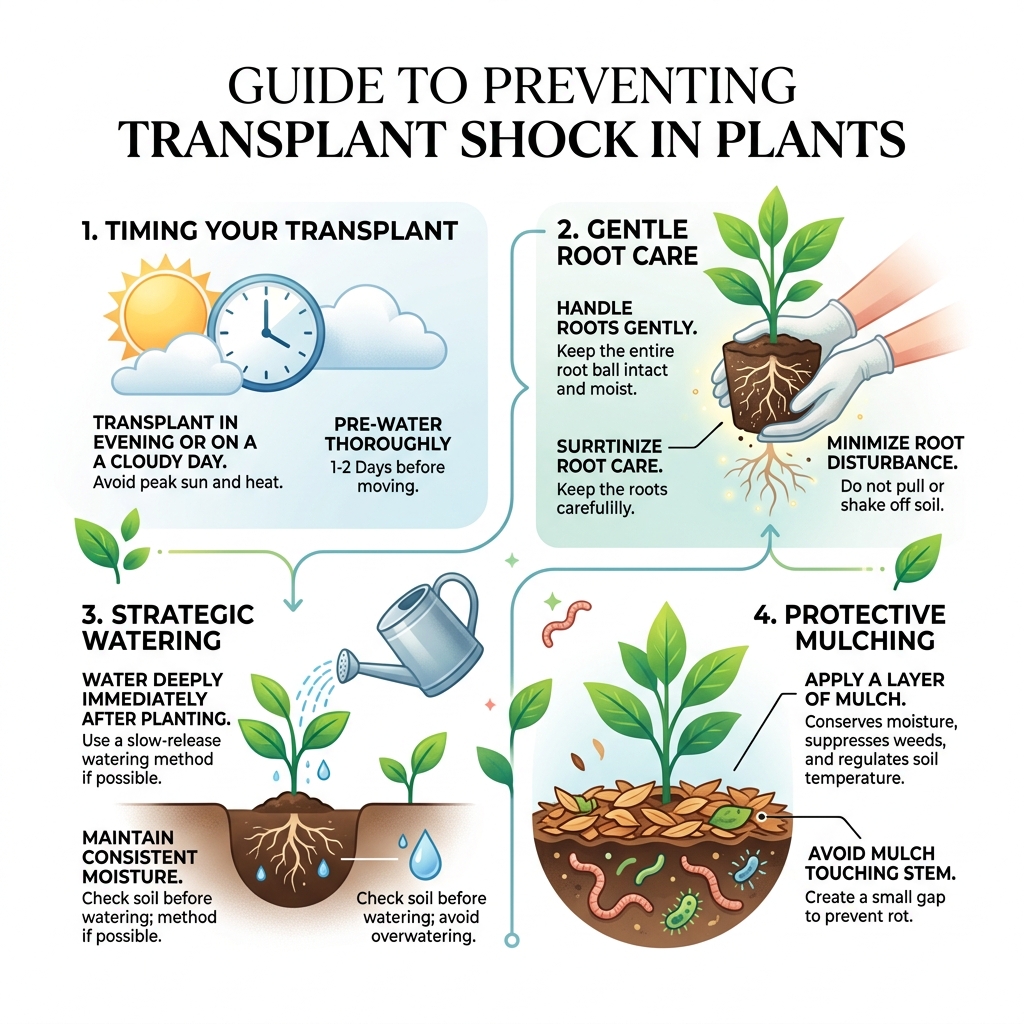
Here’s a quick summary of the most important steps:
- Water thoroughly 1-2 days before transplanting
- Handle roots gently and keep the root ball intact
- Transplant in the evening or on a cloudy day to reduce sun stress
- Harden off indoor plants gradually before moving them outside
- Mulch and water deeply immediately after planting
- Avoid fertilizing right away — wait for signs of new growth
Every plant lover has been there. You carefully move a favorite plant to a new pot or garden bed, and within days it looks terrible — drooping, yellowing, or dropping leaves like it’s given up on life.
That’s transplant shock. And it’s more common than most people realize.
When a plant gets moved, its roots are disturbed. The fine root hairs — the tiny structures responsible for pulling in water and nutrients — get damaged or lost entirely. The plant panics. It closes its stomata (the tiny pores in its leaves) to stop losing moisture. Photosynthesis slows down. The plant shifts into pure survival mode.
The result? Less energy. Less growth. Sometimes death.
What makes this tricky is that the plant looks like it needs more water — but the real problem is that its roots simply can’t absorb water efficiently yet. Overwatering at this stage can make things worse.
The good news is that with the right approach, most plants recover fully. And many cases of transplant shock are completely preventable.
Recognizing the signs of transplant shock in plants
Before we can master preventing transplant shock plants, we need to know what we are looking for. Think of these symptoms as your plant’s way of sending an SOS. It isn’t just “being dramatic”; it is physically struggling to maintain its internal balance.
Wilting and Drooping
The most classic sign is wilting. Even if the soil feels damp, the leaves might hang limp. This happens because the root system is currently too damaged or stressed to pump water up to the foliage. It’s a plumbing issue, not necessarily a lack-of-water issue.
Leaf Discoloration and Yellowing
If you notice leaves turning yellow (chlorosis) or developing brown, crispy edges, your plant is likely stressed. Yellowing often starts at the bottom as the plant sacrifices older leaves to save the new growth at the top. Browning or “scorched” edges usually mean the plant is losing moisture faster than it can replace it. For more on keeping your greenery vibrant, check out our tips for healthy houseplants.
Leaf Drop
In a desperate attempt to reduce its workload, a plant in shock might simply drop its leaves. By shedding foliage, the plant reduces the surface area from which water can evaporate. It’s a drastic survival tactic, but it doesn’t always mean the plant is dead.
Stunted Growth and Delayed Flowering
If your plant survives the initial move but seems “frozen” in time for weeks, it’s likely experiencing a growth check. It is busy repairing its root system underground rather than putting on visible showy growth above ground. You might also notice a lack of flowers or, conversely, a sudden burst of “stress crops” (excessive seeds or fruit) as the plant tries to reproduce before it thinks it might die.

Essential steps for preventing transplant shock plants
We like to think of transplanting as a major surgery for your plants. You wouldn’t want a surgeon to rush through the process or ignore the recovery room, right? Preventing transplant shock plants starts with preparation.
The Art of Hardening Off
If you are moving a plant from a cozy, climate-controlled indoor environment (or a greenhouse) to the great outdoors, you cannot do it all at once. Imagine spending all winter in a dark basement and then suddenly standing on a Caribbean beach in March for ten hours. You’d be burnt to a crisp!
Plants need a transition period of 7 to 14 days. Start by placing them in a shaded, protected spot for an hour or two, then gradually increase their exposure to sunlight and wind each day. This process allows the plant to develop a thicker waxy cuticle on its leaves to handle the harsher environment. We dive deeper into this in our guide on seasonal-care-for-houseplants.
Timing Is Everything
The “when” is just as important as the “how.”
- The Cloudy Day Rule: Always try to transplant on an overcast or cloudy day. This naturally reduces the “transpiration” (water loss) from the leaves.
- The Evening Shift: If the sun is out, wait until the evening. This gives the plant a full night of cool temperatures and high humidity to settle into its new home before the sun starts beating down again.
- Seasonal Dormancy: For larger shrubs and trees, the best time to move them is when they are dormant (late autumn or early spring). Moving a plant while it’s actively blooming is like asking someone to move houses while they are running a marathon — it’s just too much energy output at once.
Wind Protection
Wind is an underrated enemy of new transplants. It wicks moisture away from leaves at an incredible rate. If you’ve just moved a plant, consider setting up a temporary windbreak using burlap or lattice to give it a break while its roots get established.
Preparing the soil and site for success
You want the new home to be better than the old one. This means doing your homework on the specific needs of your plant. Does it like acidic soil? Does it need “wet feet” or sharp drainage?
- Dig Wide, Not Deep: The biggest mistake we see is digging a deep, narrow hole. Roots need to spread horizontally to find nutrients. Your hole should be at least twice as wide as the root ball, but no deeper. If you bury the “root flare” (where the trunk meets the roots), you risk rot and suffocation.
- Soil Amendments: While it’s tempting to fill the hole with pure compost, some experts suggest using the original “native” soil for backfilling. If the hole is too rich, the roots might never want to leave the “soup bowl” you’ve created, leading to circling roots. Instead, mix a little compost into the surrounding area to improve overall soil health. For indoor favorites, choosing the best soil for indoor plants is the first step toward a shock-free move.
- The Drainage Test: Before planting, fill the hole with water. If it hasn’t drained in an hour, you have a drainage problem that needs to be fixed with perlite or organic matter before the plant goes in.
Mastering root handling for preventing transplant shock plants
The roots are the heart of the operation. If you protect the roots, you protect the plant.
- Keep the Root Ball Intact: Try to keep as much of the original soil around the roots as possible. This soil contains beneficial microbes and protects the delicate root hairs from drying out the moment they hit the air.
- The “Tease” Method: If your plant is “pot-bound” (roots circling the inside of the pot), they won’t naturally grow outward into the new soil. You must gently tease them apart with your fingers. If they are really stubborn, you can make a few shallow vertical cuts with a clean knife to encourage new, outward growth.
- Minimize Exposure: Never leave roots sitting out in the sun or wind while you go look for your shovel. Even a few minutes of exposure can kill the fine feeder roots. Keep them covered with a damp cloth or plastic sheeting until the very second they go into the ground.
- Pruning Damaged Roots: If you see mushy, black, or broken roots during the move, snip them off with sterilized shears. This prevents rot from spreading. For more detailed steps on this “surgery,” see our guide on repotting-indoor-air-purifying-plants/.
Advanced recovery aids and home remedies
Sometimes, despite our best efforts, a plant needs a little “medicine” to get through the transition. We have found several stimulants and home remedies that can make a world of difference in preventing transplant shock plants.
| Remedy | Benefit | How to Use |
|---|---|---|
| Kelp/Seaweed Extract | Contains natural hormones that trigger root growth. | Mix a diluted solution and water the plant immediately after moving. |
| Sugar Water | Provides a quick boost to soil microorganisms. | Dissolve 2 tablespoons of sugar in a gallon of water for a one-time drink. |
| Epsom Salt | Provides Magnesium, which is essential for chlorophyll production. | Use 1 tablespoon per gallon of water to help leaves stay green. |
| Cinnamon | A natural fungicide that protects wounded roots. | Sprinkle a little powder on the root ball or soil surface. |
| Rooting Hormones | Chemically signals the plant to create new roots. | Best for bare-root plants or cuttings; follow package directions. |
The Power of Kelp
Kelp is a gardener’s best-kept secret. It’s packed with micronutrients and growth hormones (like auxins) that tell the plant, “Hey, it’s time to grow some roots!” Many organic farmers use a kelp dip for every single seedling they put in the ground.
The Sugar Trick
It sounds like an old wives’ tale, but adding a little sugar to the water can actually help. It doesn’t feed the plant directly; instead, it feeds the beneficial bacteria and fungi in the soil. When these microbes thrive, they break down nutrients more effectively, making it easier for a stressed plant to “eat.”
Cinnamon: The Natural Shield
If you had to prune any roots or if the root ball was damaged, a light dusting of cinnamon can act as a natural antimicrobial agent. It helps prevent soil-borne pathogens from entering the plant’s “wounds” while it is in its most vulnerable state. To learn more about feeding your plants the right way, check out our indoor-plant-fertilizing-guide/.
Hydration strategies for preventing transplant shock plants
Water is the most critical factor in the first 48 hours. But it isn’t just about how much you water; it’s about how you do it.
- Pre-Watering: Always water your plant thoroughly 24 hours before you move it. A hydrated plant has more internal reserves to handle the stress of the move. It also makes the root ball “stickier,” so the soil stays attached to the roots.
- Eliminating Air Pockets: When you backfill your hole with soil, air pockets can form. If a root is sitting in an air pocket, it can’t absorb water and will die. To fix this, water the plant while you are filling the hole, and then give it a deep soak afterward. This settles the soil firmly against the roots.
- The “Bagel” Mulching Method: Mulch is non-negotiable for preventing transplant shock plants. It keeps the soil cool and moist. However, do not pile it up against the trunk (the “volcano” method), as this causes rot. Instead, create a ring of mulch 2-3 inches deep that looks like a bagel, leaving a small gap around the stem or trunk.
- Deep vs. Frequent: It is better to water deeply once every few days than to give the plant a light sprinkle every day. Deep watering encourages roots to grow downward into the cool, moist earth. For more on avoiding common hydration traps, see our article on indoor-plant-watering-mistakes.
Frequently Asked Questions about transplanting
How long does it typically take for plants to recover from transplant shock?
Recovery time varies wildly depending on the type of plant.
- Vegetables and Annuals: These fast-growers usually bounce back within 3 to 7 days if given proper care.
- Perennials: You might see a “pause” in growth for 2 to 4 weeks.
- Trees and Shrubs: These are the long-haulers. It can take a full year for a shrub to establish, and large trees can take 3 to 5 years before they are truly “at home.”
During this time, the plant is focusing on root expansion. Just because you don’t see new leaves doesn’t mean the plant isn’t working hard underground!
Should you fertilize a plant immediately after transplanting?
In most cases, no. This is a common mistake. Fertilizers (especially those high in nitrogen) encourage the plant to put out new green leaves and stems. A plant in shock doesn’t have the root capacity to support new foliage yet. Pushing growth too early can lead to “nitrogen burn” on the fragile new roots.
Wait at least two weeks — or until you see the first signs of new, healthy growth — before applying a balanced fertilizer. If you absolutely must feed it, use a phosphorus-rich “starter” solution or a diluted kelp extract, which focuses on root development rather than leaf growth. Learn more about timing your nutrients in our indoor-plant-growth-tips.
What is the best time of year to transplant to minimize stress?
For most plants, the dormant season is king.
- Fall: This is often the best time for trees and perennials. The air is cool (reducing leaf stress), but the soil is still warm, allowing roots to grow for several weeks before the ground freezes.
- Early Spring: This is the second-best window, just before the buds start to break.
- Avoid Summer: Transplanting in the middle of a July heatwave is asking for trouble. If you must move a plant in summer, you will need to provide significant shade and water it daily.
Conclusion
At FinanceBillX, we know that your plants are more than just decor — they are living investments that bring life to your home and garden. Preventing transplant shock plants doesn’t require a degree in botany; it just requires a little bit of empathy for what the plant is going through.
By following these steps — preparing the site, handling the roots like fine china, and using natural aids like kelp and mulch — you can ensure your green friends transition to their new homes without the drama. Remember to be patient. Nature doesn’t hurry, and neither should your plant’s recovery. Keep a close eye on the moisture levels, provide a bit of shade when things get hot, and soon enough, you’ll see those first few leaves of new growth that signal a successful move.
For more expert gardening advice and care tips, visit our category page and let’s keep your garden thriving together!
