
Why a Pebble Tray for Houseplants Is the Easiest Fix for Dry Indoor Air
A pebble tray for houseplants is a shallow, water-filled tray with pebbles that raises the humidity around your plant through natural evaporation — no electricity, no expensive equipment needed.
Quick answer: How does a pebble tray work?
- Fill a shallow tray with pebbles or small rocks
- Add water until it sits just below the top of the pebbles
- Place your plant pot on top — the pot should never touch the water
- As the water evaporates, it creates a humid “bubble” around your plant’s leaves
Most tropical houseplants — including ferns, orchids, Alocasia, calathea, monstera, and philodendron — originally come from humid rainforest environments. Indoor air, especially in apartments with heating or air conditioning, is often far too dry for them.
The result? Crispy brown leaf tips. Curling leaves. Stunted growth.
Here’s the thing: those symptoms are easy to mistake for underwatering or too much light. But the real culprit is often just dry air — and a simple pebble tray can solve it in minutes, for as little as $5.
It also doubles as a drip catcher, protecting your windowsills and furniture from water stains. That’s a win for any apartment dweller trying to keep their space looking good and their plants thriving.

The Science of Humidity and Indoor Gardening
To understand why a pebble tray for houseplants is such a game-changer, we have to look at how plants breathe. Most of our favorite indoor companions are tropical refugees. In their native jungles, the air is thick with moisture, often hovering between 60% and 90% humidity. Our modern homes, especially those sealed tight for energy efficiency, often drop below 20% humidity in the winter. That is drier than some parts of the Sahara Desert!
Plants lose water through a process called transpiration. Think of it like plant “sweating.” Water travels from the roots, up the stem, and out through tiny pores on the leaves called stomata. When the air is bone-dry, the rate of transpiration speeds up. The plant simply can’t pull water from its roots fast enough to keep up with the dry air sucking moisture out of its leaves.
This leads to the dreaded “crispy leaf” syndrome. You might notice the edges of your Calathea turning brown and brittle, or your Alocasia leaves curling inward as if they are trying to hide. This isn’t necessarily a sign that you forgot to water the soil; it’s a sign that the air is thirsty.
Why Your Tropical Plants Need a Pebble Tray for Houseplants
By using a pebble tray for houseplants, we are essentially creating a localized “microclimate.” We aren’t trying to humidify the entire living room (which would require a massive, loud humidifier); we are just trying to humidify the few inches of air immediately surrounding the foliage.
As the water in the tray evaporates, it turns into water vapor. Because this vapor is heavier than dry air, it tends to linger around the base of the plant and rise slowly through the leaves. This increases the ambient moisture exactly where the plant needs it most.
Specific plants that absolutely crave this setup include:
- Alocasia: Known for their stunning, large leaves, they are notorious for dropping foliage if the air gets too dry.
- Ferns: These prehistoric beauties have thin, delicate fronds that crisp up at the mere thought of a heater.
- Orchids: Most orchids are epiphytes, meaning they grow on trees and pull moisture directly from the air. A tray is a must for them.
- Prayer Plants (Maranta): These move their leaves throughout the day, and they need high humidity to keep those “joints” flexible.
How to Set Up a Pebble Tray for Houseplants
Setting up your tray is a quick DIY project that usually takes about 10 to 15 minutes. You don’t need a degree in botany to get it right, but there are a few “pro tips” we’ve gathered to ensure your plants get the maximum benefit.
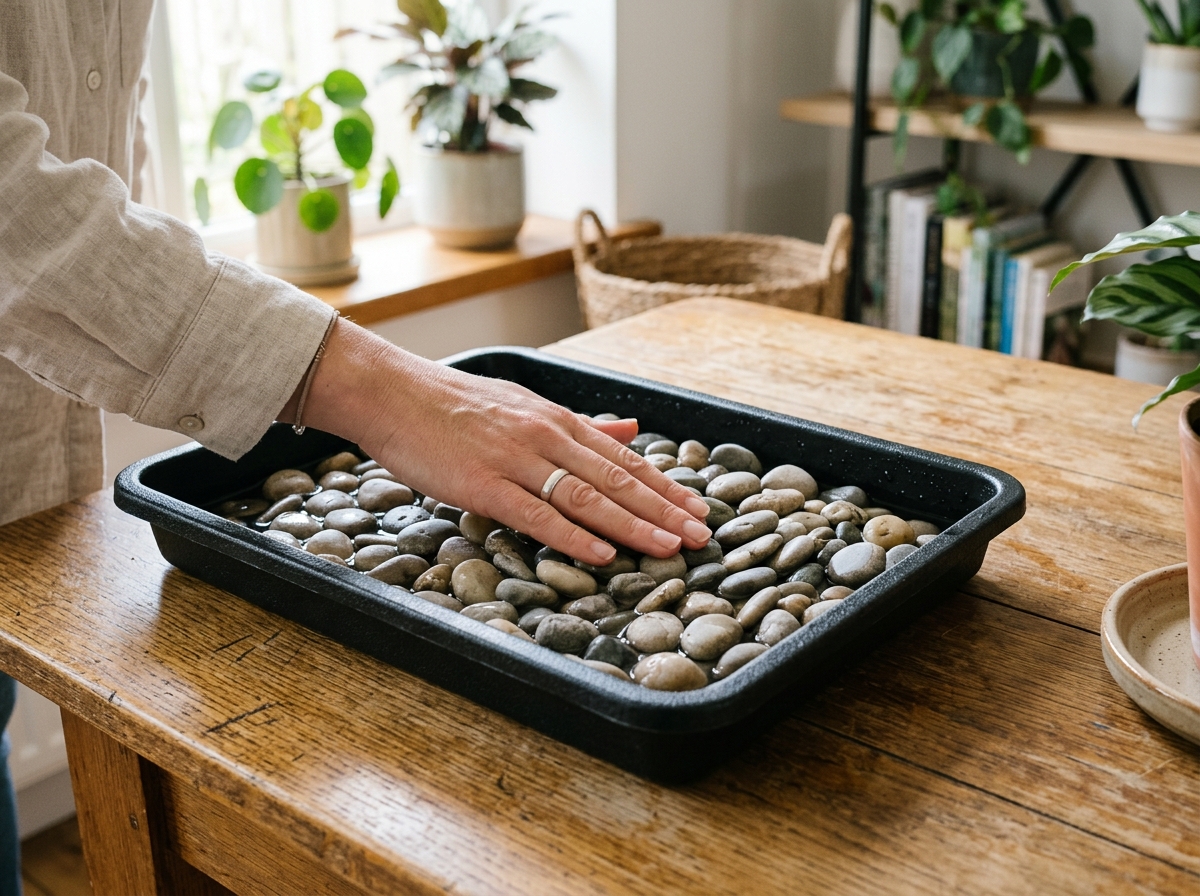
Step 1: Choose Your Tray You need a waterproof container. This can be a professional rectangular black ceramic humidity tray, a simple plastic plant saucer, or even a decorative glass dish. The wider the tray, the larger the “humidity bubble” it will create. For larger pots, look for something with a bit of depth—around 1 to 1.5 inches is ideal.
Step 2: Add the Pebbles Fill the tray with a layer of pebbles. You can use decorative river rocks, polished black stones, or even clay pebbles. The goal is to create a level surface that sits above the water line.
Step 3: Add Water Pour in water until it reaches just below the top of the pebbles. Crucial rule: The water should never touch the bottom of the plant pot. If the pot sits in water, the soil will suck up that moisture through the drainage holes (capillary action), leading to soggy roots and, eventually, root rot.
Step 4: Place Your Plant Set your plant pot directly onto the dry pebbles. As the water evaporates, your plant will enjoy a steady stream of invisible moisture.
Preventing Root Rot and Surface Damage
While we love the benefits of humidity, we have to be careful about the “side effects” of standing water.
- Stagnant Water: If water sits for too long without evaporating, it can become a breeding ground for bacteria. We recommend giving the tray a quick rinse every week or two.
- Surface Sweating: This is a common mistake people overlook. Because of the temperature difference between the water and your furniture, the bottom of the tray can develop condensation, or “sweat.” To protect your antique wooden table or windowsill, always place a waterproof mat or a decorative towel underneath the tray.
- Elevation is Key: Always ensure the drainage holes of your pot are resting on dry pebbles. If you see the bottom of the pot looking damp, you’ve added too much water.
Materials, Design, and Customization
Gone are the days when a humidity tray had to be a clunky piece of plastic. Today, you can find trays that actually enhance your home decor.
- 3D Printed PLA: Some of the most innovative options today are 3D printed humidity trays. These are often made from PLA (Polylactic Acid), which is an eco-friendly material derived from corn or beets. They are biodegradable and surprisingly durable.
- Hexagonal and Modular Designs: One of our favorite trends is the modular tray. These hexagonal pebble trays allow you to “link” multiple trays together like a honeycomb. This is perfect for grouping plants together, which naturally increases humidity even further.
- Ceramic and Resin: For a more traditional look, ceramic trays offer a heavy, high-quality feel. They are excellent for bonsai trees or premium orchids.
- Self-Watering Hybrids: There are even large self-watering trays that use capillary matting. While these are primarily for watering, they also provide a significant humidity boost as the large matting surface area allows for constant evaporation.
Maintenance and Best Practices for Long-Term Success
A pebble tray for houseplants is low-maintenance, but it isn’t “no-maintenance.” To keep your indoor jungle looking lush, follow these best practices:
- Refill Regularly: Depending on how dry your home is, the water might evaporate in a few days or a week. Check the water level every time you water your plants.
- Watch for Algae: If your tray is in a bright window, you might eventually see green algae growing on the pebbles. This isn’t necessarily harmful to the plant, but it can look a bit messy. A quick soak in a mild vinegar solution will clean the pebbles right up.
- Mineral Buildup: If you have hard water, you might notice white crusty spots (calcium deposits) on your pebbles over time. Using distilled water or rainwater can prevent this, but it’s mostly an aesthetic issue.
- Mosquito Prevention: In very warm climates, standing water can attract mosquitoes. If your tray is large, ensure the water is evaporating quickly enough that it doesn’t become a nursery for larvae.
- Seasonal Adjustments: You’ll find you need to refill your tray much more often in the winter when the heater is running. In the humid summer months, you might not need the tray at all!
Frequently Asked Questions about Humidity Trays
What are the best types of pebbles to use?
You can use almost any non-porous stone. River rocks are popular because they look natural and are easy to clean. Many people prefer polished black pebbles for a sleek, modern look. If you want something lightweight, expanded clay pebbles (LECA) are a great choice, though they may absorb some water themselves.
How often should I refill the water in my tray?
It depends on your home’s temperature and humidity. On average, most people refill their trays every 3 to 5 days. A good rule of thumb is to add water whenever the level drops to the bottom half of the tray.
Can pebble trays be used for bonsai and succulents?
Bonsai trees absolutely love humidity trays! In fact, most bonsai experts consider them essential for indoor growth. Succulents, however, are the exception. Succulents and cacti are adapted to arid, desert environments. Adding extra humidity around them can actually encourage fungal issues or rot. Keep the pebble trays for your leafy, tropical friends!
Conclusion
At FinanceBillX, we believe that gardening should be a source of joy, not a source of stress. You don’t need a high-tech greenhouse or a $200 humidifier to keep your plants happy. Sometimes, the oldest tricks are the best ones.
A pebble tray for houseplants is a sustainable, low-cost, and highly effective way to transform your home into a tropical oasis. By taking ten minutes to set up a tray, you’re giving your Alocasia, ferns, and orchids the gift of “breathable” air. Not only will your plants grow faster and look more vibrant, but you’ll also protect your home’s surfaces from the mess of daily watering.
Ready to take your plant care to the next level? Check out our comprehensive Indoor Plant Humidity Guide for more tips on mastering the art of the indoor microclimate. Happy planting!
