
Why Indoor Plant Pots With Legs Are Transforming Indoor Plant Styling
Indoor plant pots with legs are planters built with an elevated base — whether wood, metal, or another material — that lifts your plant off the floor or surface below it.
Here’s a quick look at what makes them worth considering:
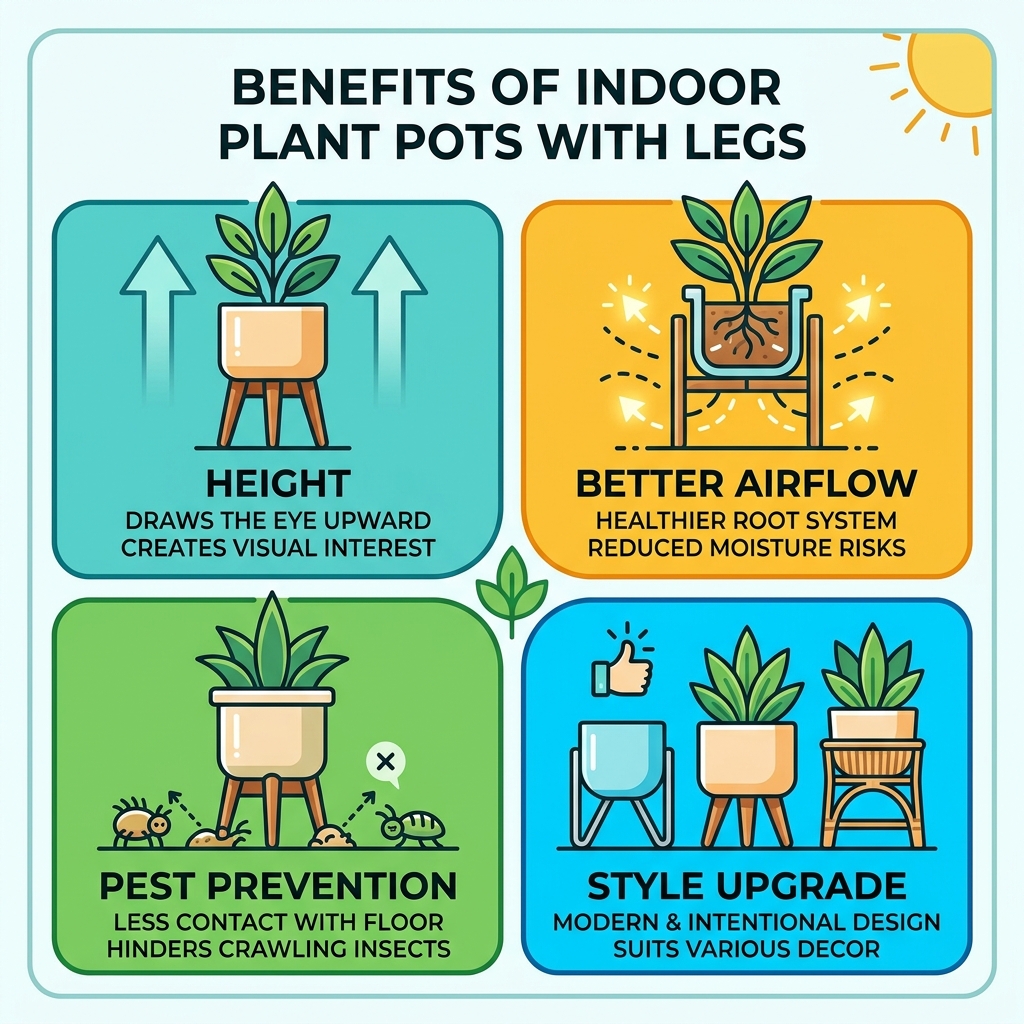
- Added height draws the eye upward and creates visual interest in any room
- Better airflow around the pot helps roots stay healthier
- Easier cleaning — you can sweep or mop right underneath
- Pest prevention — elevation reduces contact with floor-level moisture and crawling insects
- Style upgrade — legged pots look more intentional and designed than basic floor planters
Popular styles include mid-century modern wooden legs, industrial metal frames, Scandinavian oak stands, and boho rattan designs. Prices range from around $20 at mass retailers to $300+ for artisan or designer pieces.
If you’re living in an apartment and trying to keep your plants healthy and your space looking sharp, legged planters solve several problems at once — without taking up extra floor space.
Why Indoor Plant Pots with Legs are a Must-Have for Modern Homes
When we talk about interior design, we often focus on furniture and wall art, but the way we display our greenery matters just as much. Traditional floor planters can sometimes look a bit “heavy” or cluttered, especially in smaller rooms. That is where indoor plant pots with legs come to the rescue. By lifting the foliage off the ground, these pots create a sense of “negative space” underneath, making your floors look more expansive and your room feel airier.

Beyond just looking pretty, these leggy companions offer some serious practical perks:
- Air Circulation and Root Health: Plants aren’t fans of stagnant air. Elevating a pot allows air to circulate around the drainage holes and the base of the container. This helps regulate soil temperature and prevents the “soggy bottom” syndrome that leads to root rot.
- Floor Protection: We’ve all been there—moving a heavy ceramic pot only to find a permanent water ring or a colony of mold on the hardwood. Legged pots keep the moisture-trapping base away from your expensive flooring.
- Pest Prevention: Many common household pests, like fungus gnats or certain crawling insects, love the damp, dark crevices found under flat-bottomed pots. By removing that hiding spot, you make your indoor jungle a lot less hospitable to uninvited guests.
- Cleaning Accessibility: Forget struggling to lug a 50-pound Monstera every time you want to vacuum. With elevated planters, you can sweep, mop, or run a robot vacuum right underneath without breaking a sweat.
- Architectural Interest: A tripod or four-legged stand adds geometric lines to a room. Whether it’s the sleek taper of a mid-century wooden leg or the brutalist edge of a 3D-printed stand, these pots act as pieces of furniture in their own right.
Popular Materials and Design Styles for Elevated Planters
Not all legs are created equal! The material you choose dictates not only the “vibe” of your room but also how long the planter will last and how much weight it can carry.
| Material | Durability | Best Style Match | Pros | Cons |
|---|---|---|---|---|
| Wood (Oak/Teak) | High | MCM, Scandinavian | Natural warmth, sturdy, timeless | Can stain floors if not oiled/sealed |
| Metal (Iron/Steel) | Very High | Industrial, Modern | Extremely stable, holds heavy trees | Can rust if finish is chipped |
| Ceramic/Stoneware | Medium | Boho, Classic | Beautiful glazes, heavy weight | Fragile if tipped over |
| Rattan/Wicker | Low-Medium | Boho, Coastal | Lightweight, textured | Harder to clean, less stable |
| 3D-Printed PLA | Medium | Brutalist, Eclectic | Sustainable, unique shapes | Not for extremely heavy plants |
Mid-Century Modern (MCM)
This is arguably the most popular style for indoor plant pots with legs. Think tapered wooden legs (often walnut or oak) paired with a simple white or matte black ceramic cylinder. It is a classic look that fits almost any decor. This “turned leg” aesthetic brings a sophisticated 1950s flair to your living room.
Boho Chic and Natural Fibers
If you prefer a softer, more organic look, rattan standing urns or woven baskets with short wooden feet are fantastic. These add a “homey” softness and work beautifully with trailing plants like Pothos or Heartleaf Philodendron.
Sustainable and High-Tech
For the eco-conscious plant parent, there are innovative options like 3D-printed plant stands made from PLA. These use plant-based sources like corn and beets, offering a sustainable way to get that high-end architectural look. If you want to learn more about the material itself, PLA plastic is widely used in consumer 3D printing because it is lightweight and plant-derived.
Industrial Metal
Metal stands, like those often found at major home improvement stores, offer incredible stability. A ceramic planter pot with a teak stand or a heavy-duty cast iron caddy is perfect for those massive Fiddle Leaf Figs that need a solid foundation.
How to Choose the Perfect Elevated Planter
Choosing a planter isn’t just about picking the prettiest one on Pinterest. You need to consider the “physics” of the situation. A top-heavy plant in a spindly tripod stand is a recipe for a messy floor.
When shopping, keep these factors in mind:
- Weight Capacity: Some 3D-printed or rattan stands are meant for smaller tabletop plants. If you’re potting a large tree, look for solid wood or reinforced metal that can handle 50-100 lbs.
- Stability: A four-legged base is generally more stable than a tripod. If you have pets or toddlers running around, go for a wider, lower base.
- Versatility: Some modern designs feature reversible stands. For example, certain designs allow you to flip the legs to achieve two different heights, giving you more styling flexibility as your plant grows.
- Magnetic Attachments: Some high-end metal planters use magnetic bases to ensure the pot stays centered on the legs, preventing accidental slips.
For a deeper dive into choosing the right vessel for your specific species, check out our guide on the best pots for indoor plants.
Choosing the Right Size for Your Indoor Plant Pots with Legs
Sizing is the most common mistake people make. You don’t want to plant directly into a massive pot if your plant has a tiny root ball, but you also don’t want the pot to look like it’s “swallowed” by the stand.
- Small (4-6 inches): Perfect for windowsills, desks, or shelves. These usually feature short, peg-like legs.
- Medium (8-10 inches): The “sweet spot” for most houseplants like Snake Plants or ZZ Plants. These often sit at a height that works well on side tables.
- Large (12-17+ inches): These are floor planters. At this size, the legs should be substantial. Many retailers size their pots to fit standard nursery “grower” pots perfectly.
Pro Tip: Always measure the diameter of your plant’s current nursery pot. If you have a 10-inch nursery pot, look for a “legged” planter with an internal diameter of at least 10.5 to 11 inches to allow for easy removal and drainage.
Styling Tips for Indoor Plant Pots with Legs in Every Room
- The Entryway Focal Point: Use a tall, legged planter with a dramatic plant like a Bird of Paradise to greet guests. The height makes a small entryway feel grander.
- Living Room Corners: Corners can be “dead zones.” A trio of indoor plant pots with legs at varying heights (e.g., one at 12 inches, one at 18 inches, and one at 24 inches) creates a lush, tiered jungle effect.
- Bedroom Greenery: Place a medium-height planter next to your nightstand. The elevated greenery is at eye level when you’re lying in bed, providing a calming view.
- Office Desk Elevation: Use a small tripod pot to lift a succulent off your desk. This clears up space for your mousepad and notebooks while keeping the “green” within sight.
Maintenance and Care for Your Leggy Greenery
Maintaining indoor plant pots with legs requires a slightly different approach than standard pots, mainly because you’re dealing with two different components: the pot and the stand.
The Cachepot Method
Most high-end legged pots do not have drainage holes. To avoid a swampy mess, keep your plant in its plastic nursery pot and set that inside the decorative legged pot. This is called the “cachepot” method. When it’s time to water, take the nursery pot to the sink, let it drain, and then pop it back into its stylish home.
Protecting Your Floors
Even with legs, moisture can be an issue.
- Felt Pads: Always stick felt pads on the bottom of metal or wooden feet to prevent scratching.
- Tannin Protection: If you use oak legs, be aware that natural oak contains tannins. If the legs get wet, they can leave a dark stain on light carpets or porous stone. Keep them dry!
- Oiling and Wiping: Wipe metal legs with a dry cloth to prevent rust. For wooden stands, a quick rub with furniture oil once a year will keep them looking brand new.
Self-Watering Systems
If you’re a “forgetful” plant parent, look for planters with integrated self-watering reservoirs. Some designs can reduce watering frequency to just once a month by using capillary action to pull water from a hidden tank up into the soil.
Frequently Asked Questions about Elevated Planters
Do indoor plant pots with legs need drainage holes?
Ideally, no. Because they are elevated, a drainage hole might drip directly onto your floor. It is much better to use them as “cover pots” (cachepots) for plants sitting in nursery liners. If the pot does have a hole, ensure it comes with a matching saucer that fits securely inside or under the pot.
Are wooden legs or metal legs better for heavy plants?
For extremely heavy trees (like a 6-foot Fiddle Leaf Fig), metal is generally superior for long-term stability as it won’t warp or crack under pressure. However, high-quality solid hardwoods like teak or mahogany are also incredibly strong and can easily support up to 100 lbs if the joinery is solid.
How do I prevent my plant stand from wobbling on uneven floors?
This is a common struggle in older homes. You can use adhesive “shim” pads or adjustable furniture glides on the bottom of the legs. Some modern metal stands even come with screw-in leveling feet to solve this exact problem.
Conclusion
Elevating your greenery is one of the simplest and most effective ways to level up your interior design. Whether you go for the sleek lines of a mid-century modern stand or the sustainable charm of a 3D-printed brutalist piece, indoor plant pots with legs offer a blend of form and function that traditional pots just can’t match.
By choosing the right material, ensuring a proper fit for your nursery pots, and following a simple maintenance routine, you can create a healthy, stylish indoor jungle that breathes life into every corner of your home. Ready to start arranging? Elevate your home decor with our placement guides to find the perfect spot for your new leggy friends. Happy planting!
