
Why Your Plants Are Struggling (And It’s Probably Humidity)
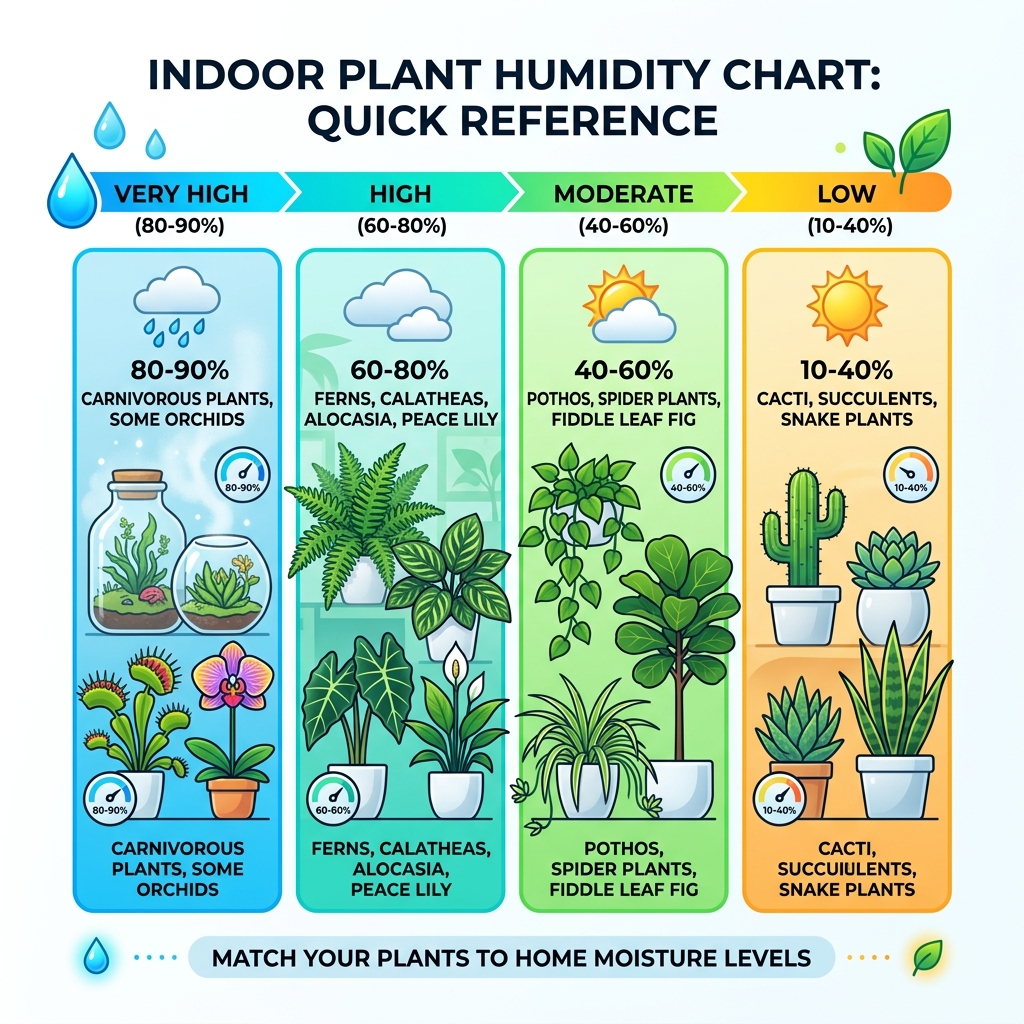
An indoor plant humidity chart is the fastest way to match your houseplants torative moisture levels in your home. Here’s a quick reference:
| Humidity Level | Range | Best For |
|---|---|---|
| Very High | 80-90% | Carnivorous plants, some orchids |
| High | 60-80% | Ferns, Calatheas, Alocasia, Peace Lily |
| Moderate | 40-60% | Pothos, Spider Plants, Fiddle Leaf Fig |
| Low | 10-40% | Cacti, Succulents, Snake Plants |
Most homes sit naturally between 40-60% humidity — which suits many common houseplants just fine. But tropical plants need more, and desert plants need less.
You’ve watered consistently. You’ve found the right light spot. Yet your Calathea still looks miserable, with brown, crispy tips curling at the edges. Sound familiar?
The missing piece is often humidity — the amount of water vapor in the air around your plants. It’s one of the most overlooked factors in indoor plant care, and one of the hardest to get right because it’s largely invisible.
Plants absorb moisture not just through their roots but also through tiny pores in their leaves called stomata. When the air is too dry, those pores close up, slowing photosynthesis, weakening the plant, and — critically for apartment growers — making it far more vulnerable to pests like spider mites.
The good news? Once you know what humidity level your plant actually needs, fixing the problem is straightforward.
Why Humidity is the Secret to Thriving Houseplants
We often think of plants as straw-like structures that only drink from the bottom up. In reality, they are dynamic organisms that interact constantly with the air. Understanding the science behind this can turn a struggling plant parent into a green-thumbed pro.
The Science of Stomata and Photosynthesis
Plants “breathe” through tiny openings on their leaves called stomata. These pores are the gateways for gas exchange—taking in carbon dioxide for photosynthesis and releasing oxygen. However, every time a plant opens its stomata, it loses water vapor to the air through a process called transpiration.
If the air is too dry (low humidity), the plant loses water faster than it can pull it from the roots. To protect itself from dehydrating, the plant closes its stomata. While this saves water, it also halts photosynthesis. No photosynthesis means no growth, leading to a “frozen” plant that never seems to sprout new leaves.
Turgor Pressure and Nutrient Uptake
Humidity also maintains “turgor pressure”—the internal water pressure that keeps plant cells firm and upright. When humidity is too low, plants wilt, and stems can even snap. High humidity actually helps the plant pull nutrients from the soil more efficiently by balancing the rate of transpiration.
Pest Resistance: The Spider Mite Connection
Dry air is a playground for pests. Spider mites, thrips, and aphids thrive in low-humidity environments. By maintaining a higher humidity level, you create an inhospitable environment for these critters. In fact, sealing a pest-infested plant in a clear plastic bag to create 100% humidity is a known “nursery secret” to disrupt the life cycle of spider mites. For more on how these factors interact, check out our indoor-plant-humidity-guide.
The Ultimate Indoor Plant Humidity Chart
To help you stop the guesswork, we have compiled the essential data into a comprehensive indoor plant humidity chart. This chart categorizes plants by their native habitats, which dictates their moisture needs.
| Plant Group | Ideal Humidity (RH) | Common Examples |
|---|---|---|
| Arid/Desert | 10% – 40% | Cacti, Aloe Vera, Haworthia, Snake Plant |
| Temperate/Standard | 40% – 60% | Pothos, Spider Plant, ZZ Plant, Ficus |
| Tropical Rainforest | 60% – 80% | Monstera, Philodendron, Fiddle Leaf Fig |
| High-Humidity Diva | 80% – 90% | Boston Fern, Calathea, Orchids, Air Plants |
Seasonal Variations and Home Challenges
Your home’s humidity isn’t static. In the winter, central heating can drop indoor humidity to as low as 10-20%—drier than the Sahara Desert! Conversely, summer air conditioning strips moisture from the air to keep us cool, which can send your tropical plants into a tailspin.
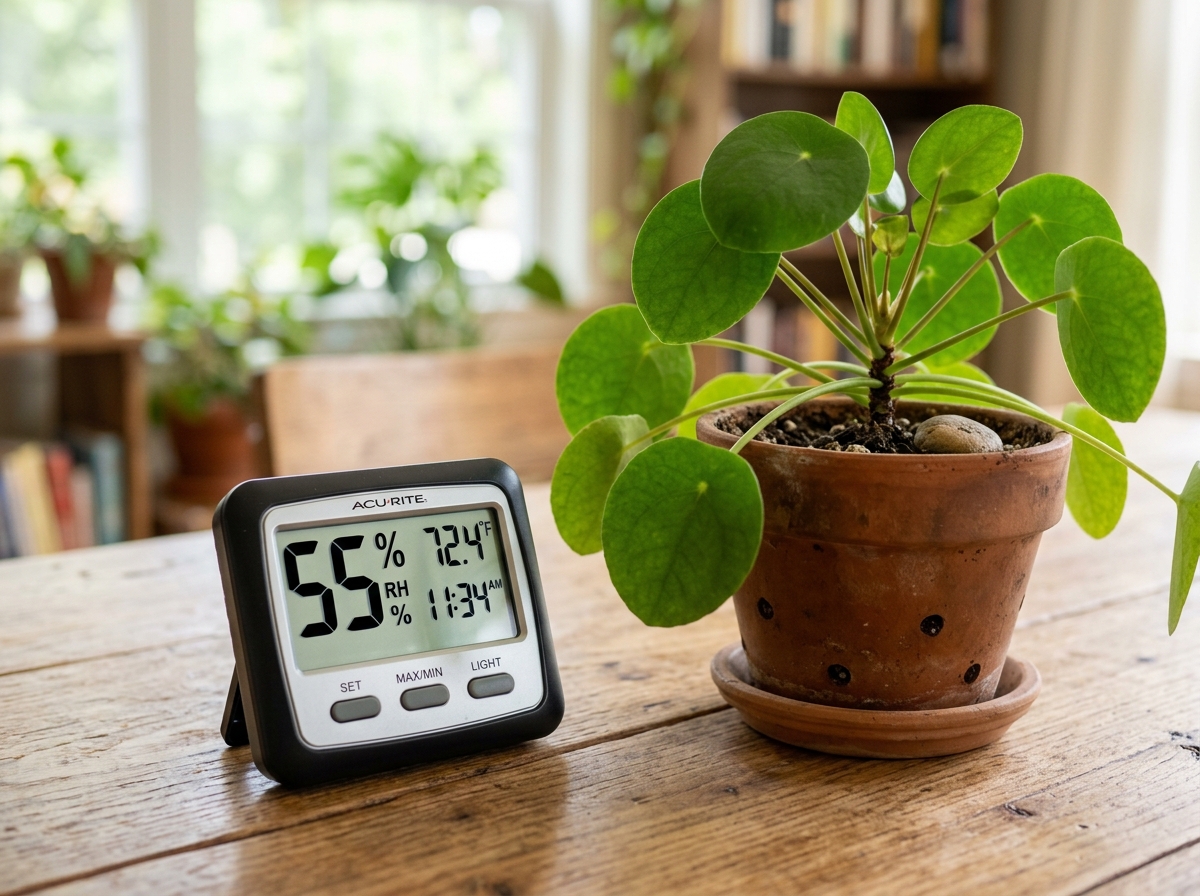
To manage this, we recommend using a digital hygrometer. This “nerdier cousin” of the thermometer is an affordable tool (usually $10-$20) that tells you exactly how much moisture is in the air.
High-Humidity Tropicals in the Indoor Plant Humidity Chart
If you own “diva” plants, you need to aim for the 60-90% range.
- Ferns: Boston and Maidenhair ferns have thin fronds that dry out almost instantly in low air.
- Orchids: Many orchids are epiphytes (they grow on trees) and pull almost all their moisture from the air.
- Calatheas & Alocasias: These plants are famous for “praying” and moving their leaves. If the humidity is low, they lose the turgor pressure needed to move, and their edges will turn brown and crispy overnight.
Moderate and Low-Humidity Lovers in the Indoor Plant Humidity Chart
Not every plant wants a steam room.
- Succulents & Cacti: These are built to store water. High humidity can actually lead to rot and fungal issues like powdery mildew.
- Snake Plants & ZZ Plants: These “indestructible” plants are perfect for beginners because they tolerate the 30-50% humidity found in most modern apartments.
How to Measure and Manage Air Moisture
Before you start buying humidifiers, you need to know your starting point. We recommend “microclimate mapping.” Move your hygrometer around different rooms. You’ll likely find that your bathroom is 10% more humid than your living room, and your kitchen (thanks to stove steam) is a hidden tropical paradise.
DIY Tests for the Tool-Free Parent
If you don’t have a hygrometer yet, try these:
- The Condensation Observation: If you see moisture fogging up your windows in winter, your humidity is likely over 60%.
- The Ice Cube Test: Place three ice cubes in a glass. If moisture doesn’t form on the outside of the glass within three minutes, your air is likely very dry.
For a hands-on way to fix dry air, learn how-to-use-a-clay-pebble-humidity-tray-for-happy-plants.
Effective Methods to Boost Humidity Naturally
Raising humidity doesn’t always require a hefty electricity bill. Here are our favorite natural methods:
- Grouping Plants: This is a nursery trade secret. Plants breathe out moisture (transpiration). By grouping them closely together, they trap that moisture, creating a localized “jungle” microclimate.
- Pebble Trays: Fill a shallow tray with decorative stones and add water until it’s just below the top of the pebbles. Place your pot on top. As the water evaporates, it rises directly into the plant’s leaves. Pro Tip: Ensure the pot isn’t sitting in the water, as this causes root rot.
- Kitchen and Bathroom Placement: Move your ferns to the bathroom. The steam from your morning shower is exactly what they crave.
- The Misting Myth: We need to be honest here—misting only raises humidity for about 90 seconds. While it’s a nice ritual, it doesn’t solve long-term dry air. If you must mist, do it in the evening to avoid “sunlight lens effect” burns on leaves.
Troubleshooting Humidity Stress Symptoms
Plants are excellent communicators; you just have to know how to read their DMs.
Signs of Low Humidity (The Most Common Issue)
- Brown, Crispy Tips: Especially on Spider Plants and Dracaenas.
- Curling Leaves: The plant is trying to reduce its surface area to stop water loss.
- Bud Blast: Flower buds turn brown and fall off before opening (common in Orchids and Hoyas).
- Yellowing Edges: Often confused with overwatering, but if the leaf feels “papery,” it’s likely humidity.
Signs of High Humidity (When It’s Too Much)
While rare in most homes, humidity over 80% can cause:
- Mold and Mildew: White fuzzy spots on the soil or leaves.
- Fungus Gnats: These annoying flies love damp surface soil.
- Soft, Mushy Stems: High humidity slows down evaporation from the soil, leading to accidental overwatering.
Frequently Asked Questions about Plant Humidity
What is the ideal humidity for most houseplants?
For the majority of indoor plants, the “sweet spot” is between 40% and 60%. This range is also optimal for human health, as it prevents dry skin and respiratory irritation without encouraging mold growth in your home’s walls.
How do I increase humidity without a humidifier?
Grouping your plants is the most effective free method. You can also place bowls of water near heat registers in the winter or hang wet laundry near your plant shelf. Creating a “mini-greenhouse” by placing a glass cloche or even a clear plastic bag over a struggling plant can provide an immediate 90% humidity boost.
Can humidity be too high for indoor plants?
Yes! If humidity stays consistently above 80% without good airflow, you risk “edema” (where plant cells burst from too much water) and fungal infections. If you see “sweat” on the tips of your leaves (guttation), it’s a sign the plant is struggling to transpire, and you should crack a window or turn on a fan.
Conclusion
At FinanceBillX, we believe that successful indoor gardening is about creating a partnership with your plants. By using an indoor plant humidity chart and monitoring your environment with a simple hygrometer, you take the guesswork out of the equation.
You don’t need a high-tech laboratory to keep your plants happy. Start by grouping your tropicals, setting up a few pebble trays, and watching how they respond. Your green friends will thank you with lush, vibrant growth and fewer “meltdowns” during the dry winter months.
Ready to become a true plant expert? Explore more expert care tips and turn your home into the thriving urban jungle you’ve always dreamed of!
