
Why Making Your Own Terrarium Is the Easiest Indoor Garden You’ll Ever Build
Make your own terrarium in just a few simple steps:
- Choose a clear glass container – a jar, bowl, or bottle with or without a lid
- Add a drainage layer – 1 to 2 inches of gravel or small pebbles at the bottom
- Layer activated charcoal – a thin layer to prevent bacteria and odors
- Add potting soil – at least 2 inches deep for roots to grow
- Plant your chosen plants – slow-growing, small varieties suited to your container type
- Water lightly – mist until the soil darkens, then seal or leave open depending on plant type
- Place in indirect light – 4 to 6 hours of bright, diffused light daily
Imagine a tiny garden that practically waters itself. That’s exactly what a terrarium is.
A terrarium is a sealed or open glass container holding soil, plants, and moisture. Closed versions create their own mini water cycle — water evaporates, condenses on the glass, and drips back down to the roots. One famous sealed terrarium has only been watered once in over 53 years.
For apartment dwellers dealing with limited space, pests, or dry indoor air, a terrarium is a genuinely low-effort way to keep living plants thriving. No garden beds. No outdoor exposure. No complicated watering schedules.
The concept has been around since 1833, when botanist Nathaniel Bagshaw Ward accidentally discovered that plants could thrive inside a sealed glass bottle — a find that eventually transformed how explorers transported live plants across the world.
Today, building one at home takes under an hour and costs less than $20.
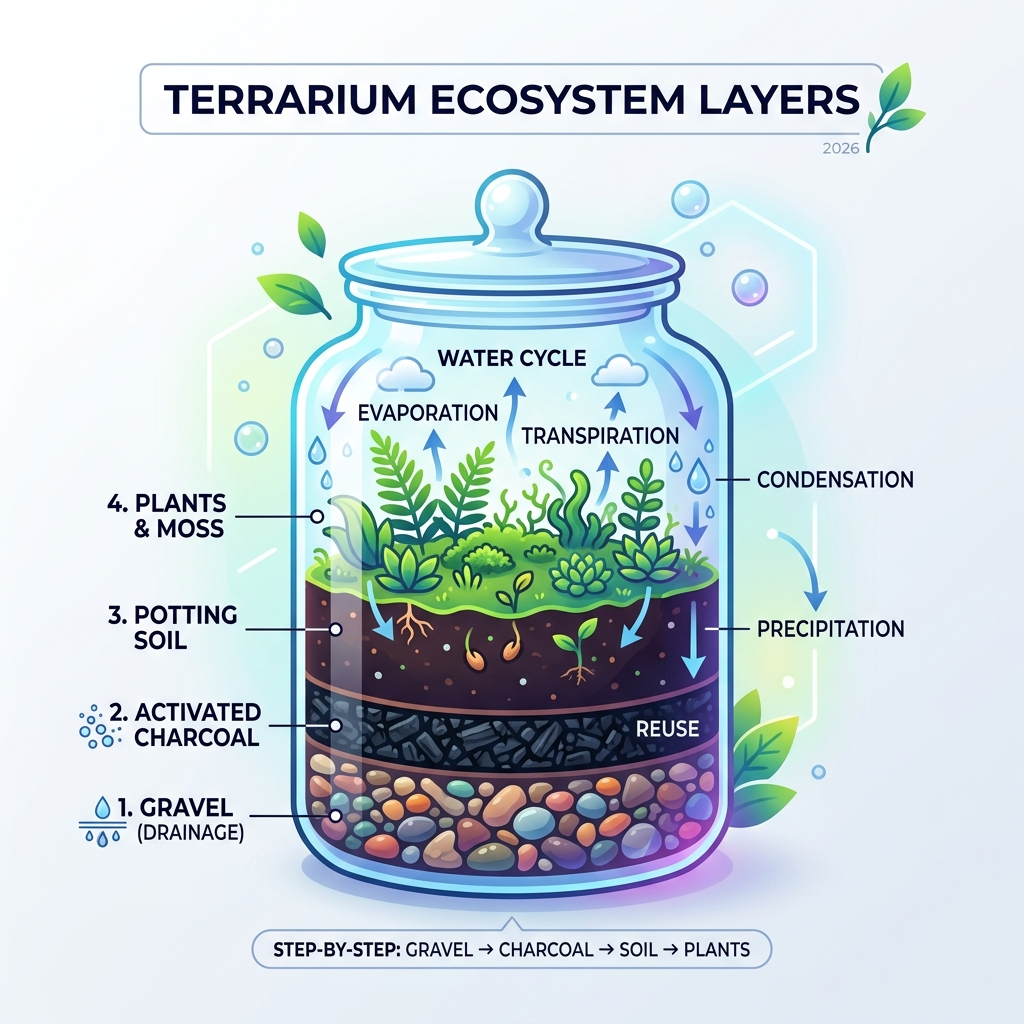
Understanding the Ecosystem: Open vs. Closed Containers
Before you run to the cupboard to grab a jar, we need to talk about the two main “personalities” a terrarium can have. Choosing between an open or closed container isn’t just about aesthetics; it’s about deciding which climate you want to host in your home.
The Closed Terrarium: A Self-Sustaining Marvel
A closed terrarium is a sealed environment. Think of it as a miniature rainforest trapped in glass. Because the lid is tight, moisture cannot escape. Instead, it undergoes a constant cycle: water evaporates from the soil and transpires from the plant leaves, condenses on the glass walls, and “rains” back down. This creates a high-humidity, stable environment.
This is the “set it and forget it” option. As we mentioned, some have lasted decades without a fresh drop of water! If you want to dive deeper into this specific setup, check out our guide on the DIY Closed Terrarium: A Tiny Ecosystem Inside a Jar.
The Open Terrarium: Fresh Air and Sunshine
An open terrarium doesn’t have a lid. Because air circulates freely, moisture evaporates into your room. This creates a much drier environment, making it perfect for plants that hate “wet feet,” like cacti and succulents. You will need to water these manually, but they are much less prone to mold than their closed counterparts. You can learn more about choosing the right vessel in our article on Creating Your Own Indoor Plant Terrarium.
The History of the Wardian Case
The terrarium wasn’t always a trendy coffee-table piece. In 1833, Nathaniel Bagshaw Ward, a London physician, accidentally discovered that a fern spore had germinated in a sealed glass jar he was using to observe a moth cocoon. This led to the invention of the Wardian Case. These heavy, glass-and-wood structures allowed botanists to transport exotic plants from London to Sydney and back without the salt spray of the ocean killing them. We are essentially building modern, lightweight versions of these historical survival pods!
Essential Supplies to Make Your Own Terrarium
One of the best parts about learning how to make your own terrarium is that you likely have half the supplies in your kitchen or garage right now. You don’t need a professional glassblowing kit—though some people do take classes for that! You just need a clear vessel and a few layers of earth.
The Vessel
Clear glass is non-negotiable. Avoid colored glass, as it blocks the specific wavelengths of light your plants need for photosynthesis. You can use anything from a mason jar to a fishbowl or an old pickle jar. For more inspiration on repurposing glass, see our guide on how to Upcycle Old Jars into Cute Terrariums DIY Project.
The Layers
Because a glass jar has no drainage holes (unless you’re a wizard with a diamond drill bit), we have to build a “false bottom.”
- Drainage Gravel: Small stones or pebbles (1–2 inches) provide a place for excess water to sit so it doesn’t rot your plant roots.
- Activated Charcoal: This is the “filter.” It absorbs odors and prevents bacteria from turning your mini-jungle into a stinky swamp. Note: Use horticultural or activated charcoal, not barbecue briquettes!
- Substrate Barrier: This is a pro-tip. Use a piece of mesh screen, dried sphagnum moss, or even a coffee filter between the charcoal and the soil. This prevents the dirt from sifting down into your pretty rocks.
- Potting Soil: Use a high-quality, light potting mix. Avoid garden soil, which is too heavy and might contain hitchhiking pests.
Open vs. Closed Terrarium Requirements
| Feature | Closed Terrarium | Open Terrarium |
|---|---|---|
| Humidity | High (Tropical) | Low (Arid) |
| Watering Frequency | Rarely (Months to Years) | Weekly or Bi-weekly |
| Ideal Plants | Ferns, Moss, Nerve Plants | Succulents, Cacti, Air Plants |
| Air Circulation | Minimal | High |
| Risk Factor | Mold/Rot | Drying out |
Choosing the Best Plants to Make Your Own Terrarium
Not all plants want to live in a jar. To make your own terrarium successfully, you need slow-growing “dwarf” varieties.
- For Closed Terrariums: Look for moisture-lovers like the Nerve Plant (Fittonia) with its bright pink or white veins, Polka Dot Plants, Button Ferns, or Strawberry Begonias. Moss is also a fantastic base layer that holds moisture like a sponge. Check out A Unique Decor Idea DIY Indoor Moss Terrarium for tips on using moss.
- For Open Terrariums: Stick to the desert dwellers. Echeveria, Jade, and Aloe are great choices. You can also use Air Plants (Tillandsia), which don’t even need soil! If you’re a fan of the “desert look,” our Succulents 101 DIY Mini Succulent Terrariums guide is a must-read.
Step-by-Step Guide: How to Make Your Own Terrarium
Ready to get your hands dirty? Follow this step-by-step process to ensure your ecosystem thrives from day one.
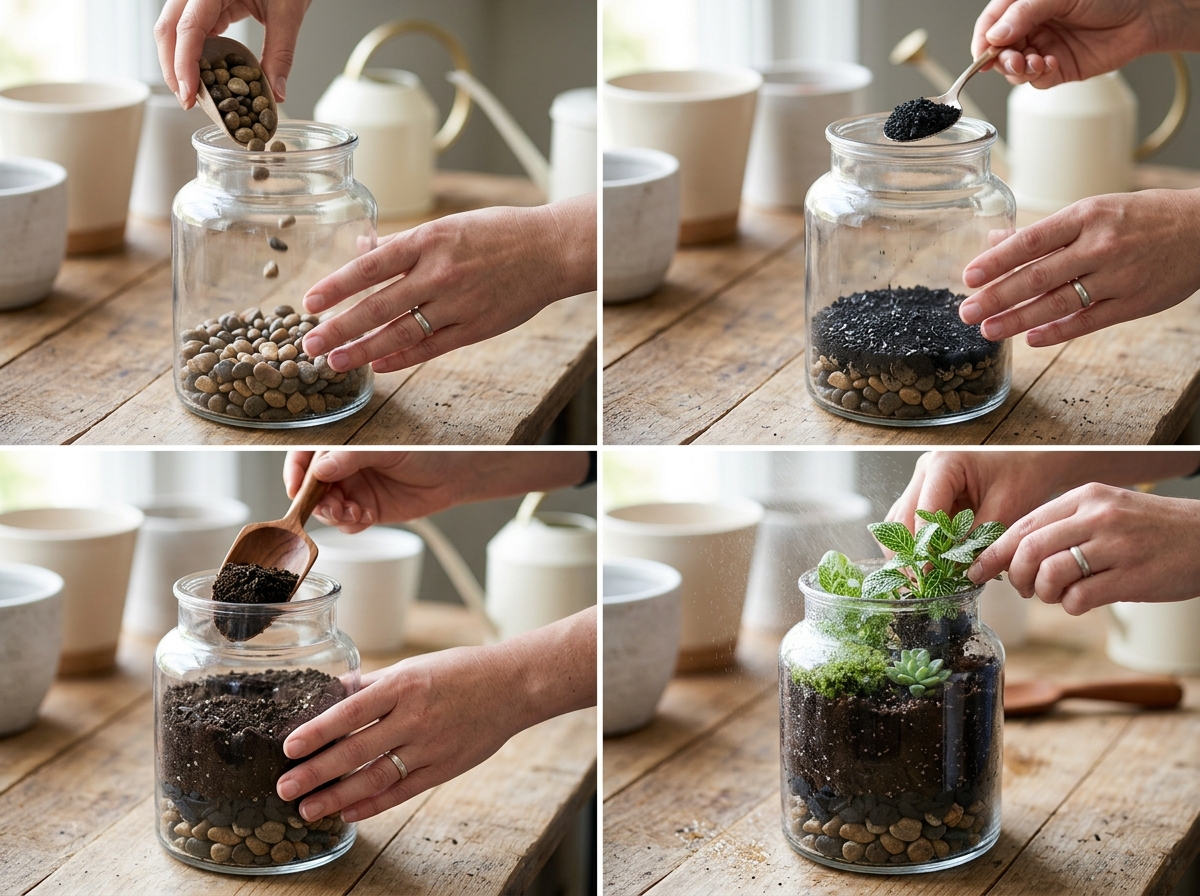
Step 1: Prepare the Container
Wash your glass container thoroughly with soapy water and dry it completely. Any lingering bacteria can bloom quickly in a humid environment.
Step 2: The Foundation (Drainage & Filtration)
Pour about 1 to 2 inches of pebbles or gravel into the bottom. Follow this with a thin layer (about half an inch) of activated charcoal. If you are using a substrate barrier (like moss or a coffee filter), place it on top of the charcoal now.
Step 3: Add the Soil
Add at least 2 to 3 inches of potting soil. A good rule of thumb is that your soil layer should be deep enough for the root balls of your plants but should not take up more than a quarter of the total container height.
Pro Tip: Slope the soil! Creating a “hill” in the back of the jar adds depth and makes your terrarium look like a professional landscape rather than a flat pot.
Step 4: Planting
Take your plants out of their nursery pots and gently tease the roots to loosen them. Use a spoon or your fingers to create a small crater in the soil. Place your “thriller” (the largest or tallest plant) first, usually toward the back or center. Fill in around it with “fillers” and “spillers” (creeping plants like ivy or moss).
Ensure no leaves are touching the glass walls, as this can lead to rot from condensation buildup. For a deeper dive into the planting phase, visit our 5 Steps to Making a Miniature World a DIY Terrarium Guide.
Step 5: The Finishing Touches
Clean the inside glass walls with a dry paintbrush or a damp paper towel on a chopstick. Add your decorative elements—this is where your personality shines!
Creative Themes to Personalize and Make Your Own Terrarium
Don’t just stop at plants! You can turn your terrarium into a work of art by adding a theme.
- Fairy Gardens: Add tiny bridges, miniature houses, and small figurines.
- Prehistoric Jungle: Use plastic dinosaurs and jagged rocks to create a Jurassic scene. This is a huge hit with kids!
- Beach Paradise: Use white sand as a top layer and add tiny seashells and a miniature umbrella.
- The Zen Garden: Focus on smooth river stones, a single piece of driftwood, and lush green moss.
For more creative sparks, look at our DIY Plant Terrarium Ideas Bringing Nature Indoor or explore DIY Project Glass Globe Terrariums for Indoor Plants.
Maintenance and Troubleshooting Your Miniature Garden
Once you make your own terrarium, the hard work is mostly over. However, even a self-sustaining ecosystem needs a little “parental” supervision.
Light Requirements
Terrariums need bright, indirect light. Think of a spot near a window but not in the path of direct sunbeams. Direct sunlight hitting a glass jar acts like a magnifying glass, effectively “cooking” your plants inside. If your plants are reaching and looking “leggy,” they need more light. If they look scorched or bleached, move them further back.
Watering and Condensation
In a closed terrarium, you should see a light fog on the glass in the morning that clears up by noon.
- Too much water: If the glass is so foggy you can’t see the plants, or if water is dripping constantly, open the lid for 24 hours to let some moisture escape.
- Too little water: If no condensation ever forms, or the soil looks light brown and dry, give it a light misting with a spray bottle or use a turkey baster for precision.
Pruning and Cleaning
As your plants grow, they may start to outgrow their home. Use long-handled scissors to snip off any leaves that touch the glass or look yellow/brown. Removing dead debris is crucial to prevent mold. If you see white, fuzzy mold, scoop it out immediately and leave the lid off for a day to improve air circulation.
For a complete maintenance checklist, see The Ultimate Guide to Building Your Own Indoor Plant Terrarium and Start Your Own Indoor Jungle DIY Terrariums.
Frequently Asked Questions about Terrariums
How long can a self-sustaining terrarium last?
A well-balanced closed terrarium can last indefinitely. While the “53-year-old jar” is an extreme example, many home terrariums thrive for 5 to 10 years with only occasional pruning and light adjustments.
How much water should I use when building a terrarium?
Start small! It is much easier to add water than to remove it. For a medium-sized jar, about 1 to 2 ounces of water (delivered via a spray bottle) is usually enough to get the cycle started. The soil should look dark and moist, but there should not be a pool of water in the gravel layer.
Where is the best place to put a terrarium for light?
A north or east-facing window is usually perfect. These spots provide consistent, soft light without the harsh heat of afternoon sun. Avoid placing them directly above radiators or right next to air conditioning vents, as extreme temperature swings can stress the plants.
Conclusion
When you make your own terrarium, you aren’t just putting a plant in a jar; you’re building a living, breathing world. It’s a project that combines science, art, and the soothing power of nature. Whether you’re a seasoned gardener or someone who has a history of “unintentional plant homicide,” the terrarium is your ticket to a lush, green home.
At FinanceBillX, we believe that bringing nature indoors shouldn’t be expensive or stressful. With a little bit of gravel, some charcoal, and a dash of creativity, you can transform any old glass jar into a Midwestern jungle.
Ready to expand your green thumb? Start your next green project today and see how easy it is to bring the outdoors in!
