
Why a Pebble Tray for Fiddle Leaf Fig Makes All the Difference
A pebble tray for fiddle leaf fig is one of the simplest, cheapest ways to boost humidity around your plant. Here’s the quick answer:
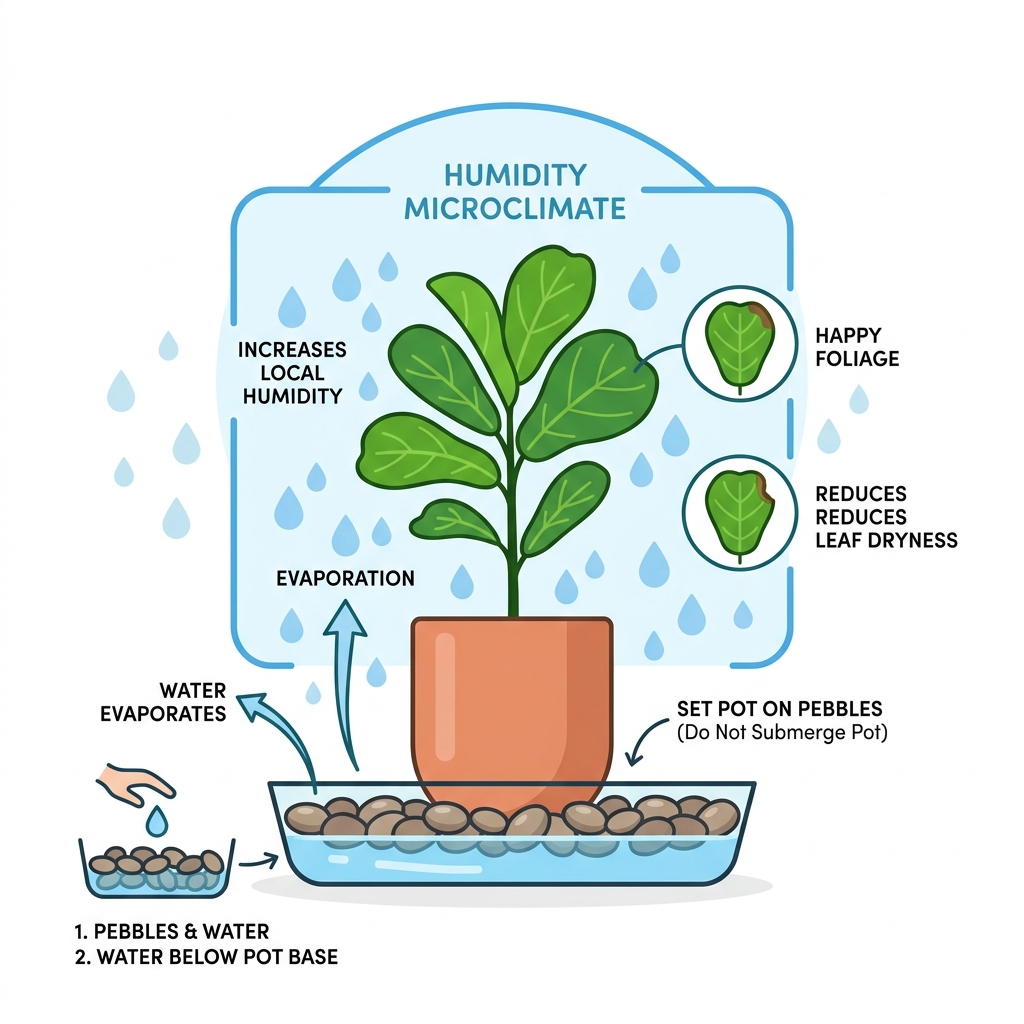
How to set one up in 4 steps:
- Fill a shallow, water-tight tray with medium-sized pebbles (1-2 cm)
- Add water until pebbles are one-third to halfway submerged
- Set your fiddle leaf fig pot on top — the pot base must not touch the water
- Refill as the water evaporates, roughly once a week
This setup raises the local humidity around your plant through simple evaporation — no humidifier needed.
Fiddle leaf figs are tropical plants. In their natural habitat, they enjoy warm, humid air. Indoors, especially in apartments with heating or air conditioning, the air gets dry fast.
Dry air is one of the most common reasons fiddle leaf figs develop pockmarked leaves, brown edges, or shriveled new growth. The ideal humidity range for a healthy fiddle leaf fig is 50-80% — much higher than the typical indoor average.
A pebble tray won’t replace a full humidifier, but real-world measurements show it can raise local humidity by around 8 percentage points in a mid-range indoor environment. That’s often enough to make a real difference for your plant’s leaf health.
Recognizing Low Humidity Signs in Your Ficus Lyrata
If you’ve ever looked at your Fiddle Leaf Fig and thought the leaves looked a bit like the surface of Mars—full of dimples, craters, and pockmarks—you aren’t alone. These are the classic “cries for help” from a plant living in air that is far too dry.
Because these plants are native to the rainforests of Western and Central Africa, they are biologically programmed for moisture. When the indoor relative humidity drops below 30-40% (common in winter or air-conditioned summers), the plant struggles to unfurl its massive leaves properly.
Watch out for these visual cues:
- Pockmarked or Puckering Leaves: The leaf surface looks uneven and bumpy rather than smooth and glossy.
- Cracked and Torn Edges: As the leaf grows, the dry air causes the tissue to become brittle, leading to physical “tears” even if you haven’t touched the plant.
- Shriveled New Growth: This is the most heartbreaking sign. New baby leaves might emerge looking brown or shriveled, often sticking together so tightly they can’t open without ripping.
- Brown, Crispy Tips: While this can sometimes signal watering issues, consistent browning along the very edges of several leaves usually points to low ambient moisture.
By implementing a pebble tray for fiddle leaf fig, we can mitigate these “Mars-like” textures and help those giant, violin-shaped leaves emerge strong and supple.
How to Build a DIY Pebble Tray for Fiddle Leaf Fig
Building a pebble tray for fiddle leaf fig is a 10-minute project that costs less than a fancy latte, but the payoff for your plant’s health is massive. The goal is to create a constant source of evaporation right at the base of the plant.
Step-by-Step Assembly
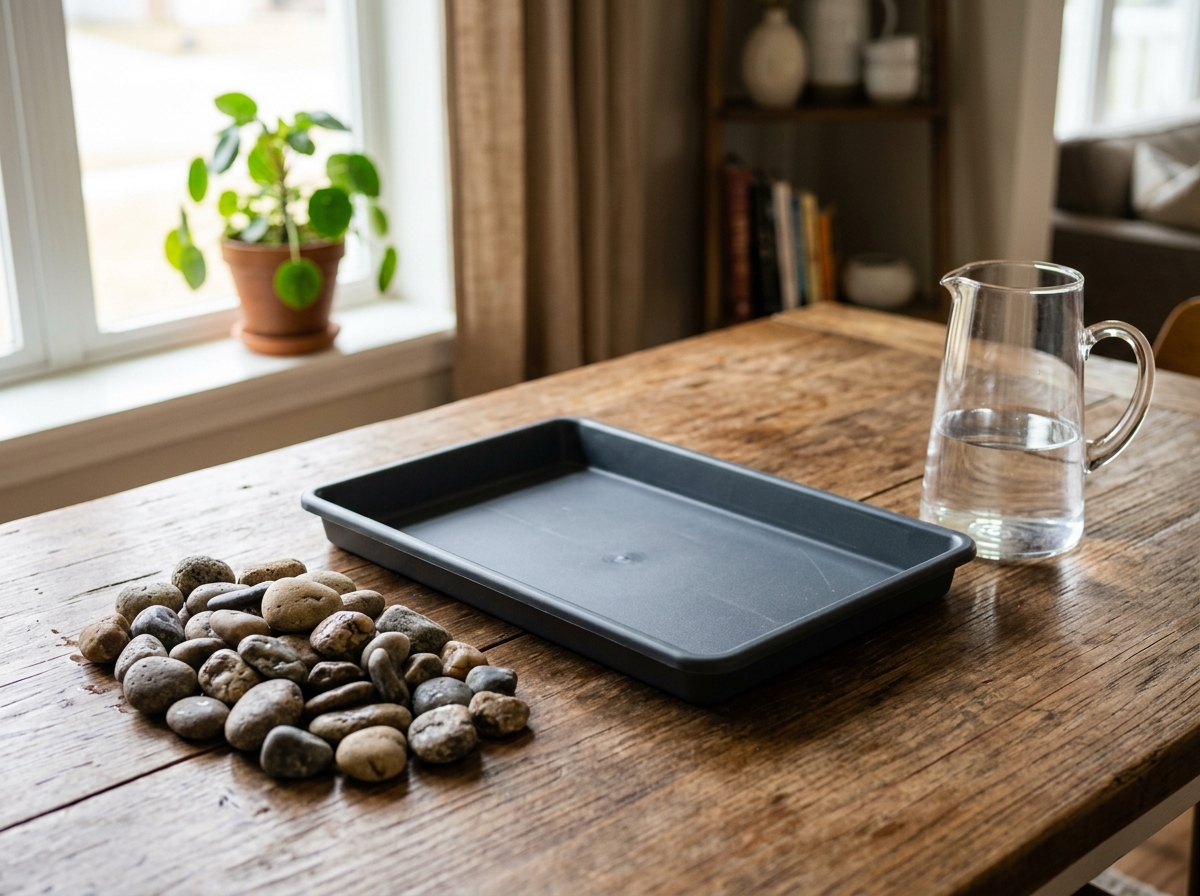
- Select Your Tray: Choose a water-tight saucer or tray that is wider than the base of your pot. For larger floor trees, a heavy-duty boot tray works wonders.
- Layer the Pebbles: Fill the tray with an even layer of stones. You want enough depth so that the pot can sit securely on top without wobbling.
- Add Water: Pour in water until the pebbles are roughly 1/3 to 1/2 submerged.
- Position the Plant: Place your Fiddle Leaf Fig pot directly on the pebbles.
- The Golden Rule: Ensure the bottom of the pot—and its drainage holes—are not touching the water. If the pot sits in water, the soil will “wick” that moisture up, leading to the dreaded root rot. The pebbles act as a dry pedestal.
Essential Materials for Your Pebble Tray for Fiddle Leaf Fig
To make the most effective tray, we recommend these specific materials:
- Water-tight Saucer: Plastic, ceramic, or metal works fine. Just ensure there are no leaks that could ruin your flooring.
- Medium-Sized Pebbles (1-2 cm): These provide the best balance of stability for the pot and surface area for evaporation. River pebbles are a great choice because they are smooth and easy to clean.
- Activated Charcoal: A small handful mixed into the pebbles can help keep the water fresh and prevent that “swampy” smell.
- Distilled or Rainwater: If you have very hard tap water, using distilled water prevents white mineral crusts from forming on your pretty stones.
- Decorative Stones or Sea Shells: Don’t be afraid to get stylish! Glass beads or sea shells can add a decorative touch while serving the same functional purpose.
Optimal Placement for a Pebble Tray for Fiddle Leaf Fig
Where you put your tray is just as important as how you build it. Fiddle leaf figs are notoriously finicky about their environment.
- Bright Indirect Light: Place your setup near a window with filtered light. Avoid harsh, direct sun which can scorch leaves, and avoid dark corners where the plant will languish.
- Draft Avoidance: Keep the tray away from AC vents, heaters, or drafty doors. Forced air dries out the microclimate you’re trying to build.
- Temperature Stability: Aim for a room temperature between 18°C and 24°C (64-75°F). If the room is too cold (below 20°C), the evaporation rate slows down, making the tray less effective.
Maximizing the Effectiveness of Your Humidity Setup
Is a pebble tray for fiddle leaf fig actually worth the effort? Based on real-world measurements, a tray can increase relative humidity (RH) from a baseline of 45% to about 53%. While an 8% jump might seem small, it’s often the difference between a leaf that tears and one that expands perfectly.
Comparing Humidity Methods
| Method | Humidity Boost | Pros | Cons |
|---|---|---|---|
| Pebble Tray | ~5-10% | Cheap, low maintenance, localized | Only works near the tray |
| Humidifier | 20% + | Highly effective, covers whole room | Expensive, needs cleaning, uses electricity |
| Misting | <2% (temporary) | High “fun” factor | Can spread fungus, interferes with photosynthesis |
| Grouping Plants | ~10-25% | Natural, looks great | Risk of pest spread between plants |
One of the best ways to supercharge your results is by grouping plants. When you place your Fiddle Leaf Fig on a large tray (like a boot tray) alongside other humidity-loving friends like Monsteras or Calatheas, they create a “Calathea Island” effect. Through transpiration, the plants release their own moisture, which gets trapped in the group, raising humidity by as much as 25% compared to the rest of the house.
For more detailed tips on using different materials, check out our guide on how-to-use-a-clay-pebble-humidity-tray-for-happy-plants.
Maintenance and Troubleshooting for Long-Term Health
A pebble tray isn’t a “set it and forget it” tool. Without a little TLC, it can become a breeding ground for things you don’t want in your living room.
- Refill Frequency: Check your water levels weekly. In the heat of summer or the peak of winter heating, the water may evaporate in just a few days.
- Algae and Slime Control: If you notice green film or “slime” on the pebbles, it’s time for a scrub. Empty the tray, wash the pebbles in warm soapy water, and rinse thoroughly.
- The Vinegar Soak: Over time, tap water leaves behind white mineral deposits (calcium/lime). To remove these, soak your pebbles in a mixture of one part white vinegar to three parts water for an hour, then scrub.
- Preventing Root Rot: Always double-check that the water level hasn’t risen high enough to touch the bottom of the pot. If you accidentally overfill it, use a turkey baster or sponge to remove the excess.
Frequently Asked Questions about Fiddle Leaf Humidity
Are pebble trays effective for large floor-sized trees?
Yes, but size matters! A tiny saucer under a 6-foot tree won’t do much. For large floor-sized trees, you need a tray with a large surface area. The more water surface exposed to the air, the more evaporation occurs. Using a large “boot tray” or a custom-built wide tray is the best way to provide enough humidity for a massive Ficus lyrata.
How often should I refill the water?
On average, once a week is sufficient. However, this varies wildly based on your home’s climate. If you live in a very dry area like Arizona or Nevada, or if you have the heater blasting in December, you might need to top it off every 3-4 days. Always keep the pebbles 1/3 to 1/2 submerged for the best results.
Can I use a pebble tray with a faux fiddle leaf fig?
While a faux tree doesn’t need humidity to survive, many people use a pebble tray for fiddle leaf fig (even the fake ones!) for aesthetic reasons. It adds a touch of realism and “organic” feel to the base of the plant. Plus, if you ever decide to swap the faux plant for a real one, your humidity station is already built! Just remember to keep it dusted, as pebbles can be dust-magnets.
Conclusion
At FinanceBillX, we want your indoor jungle to thrive without breaking the bank. A pebble tray for fiddle leaf fig is the ultimate “low-cost, high-reward” hack for any plant parent. By mimicking the tropical vibes of the rainforest, you ensure your Ficus lyrata stays glossy, green, and gorgeous.
Keep those leaves healthy, watch for those Mars-like pockmarks, and remember that a little evaporation goes a long way. For more expert advice on maintaining the perfect environment for your greenery, visit our comprehensive Indoor Plant Humidity Guide.
