
Essential Care for Haworthia Terrarium Zebra Plants
When we bring haworthia terrarium zebra plants into our homes, we are essentially inviting a piece of the South African Eastern Cape onto our desks. These resilient succulents, specifically Haworthiopsis attenuata, are built for survival. In their native habitat, they often grow in the shadow of rocks or even buried slightly in the sand to protect themselves from the harsh sun. This background is exactly why they are such champions in a terrarium setting—they don’t demand the constant attention that a tropical fern might.
To keep your Zebra Haworthia thriving for its potential 50-year lifespan, we need to mimic those semi-arid conditions. Temperature-wise, these plants are quite comfortable in our living spaces, preferring a range between 60-80°F (15-27°C). While they can handle a dip down to 50°F in the winter, anything lower can cause cellular damage.
Lighting is perhaps the most critical factor. In a glass enclosure, light is magnified. You want to provide 4-6 hours of bright, indirect sunlight daily. An east-facing window is usually the “sweet spot,” offering gentle morning sun without the scorching heat of the afternoon. If you notice the leaves turning a deep red, your plant is telling you it’s getting too much sun stress. Conversely, if the white stripes start to fade or the plant stretches out (etiolation), it’s begging for more light. For more details on positioning, check out our guide on indoor-plant-sunlight-requirements.
Humidity is another area where many beginners trip up. Unlike tropical terrariums, haworthia terrarium zebra plants prefer low to average humidity (around 40-60%). If your home is particularly dry in the winter, a light misting or a nearby humidifier set to a low level can help, but generally, they are very forgiving. You can learn more about managing these levels in our indoor-plant-humidity-guide.
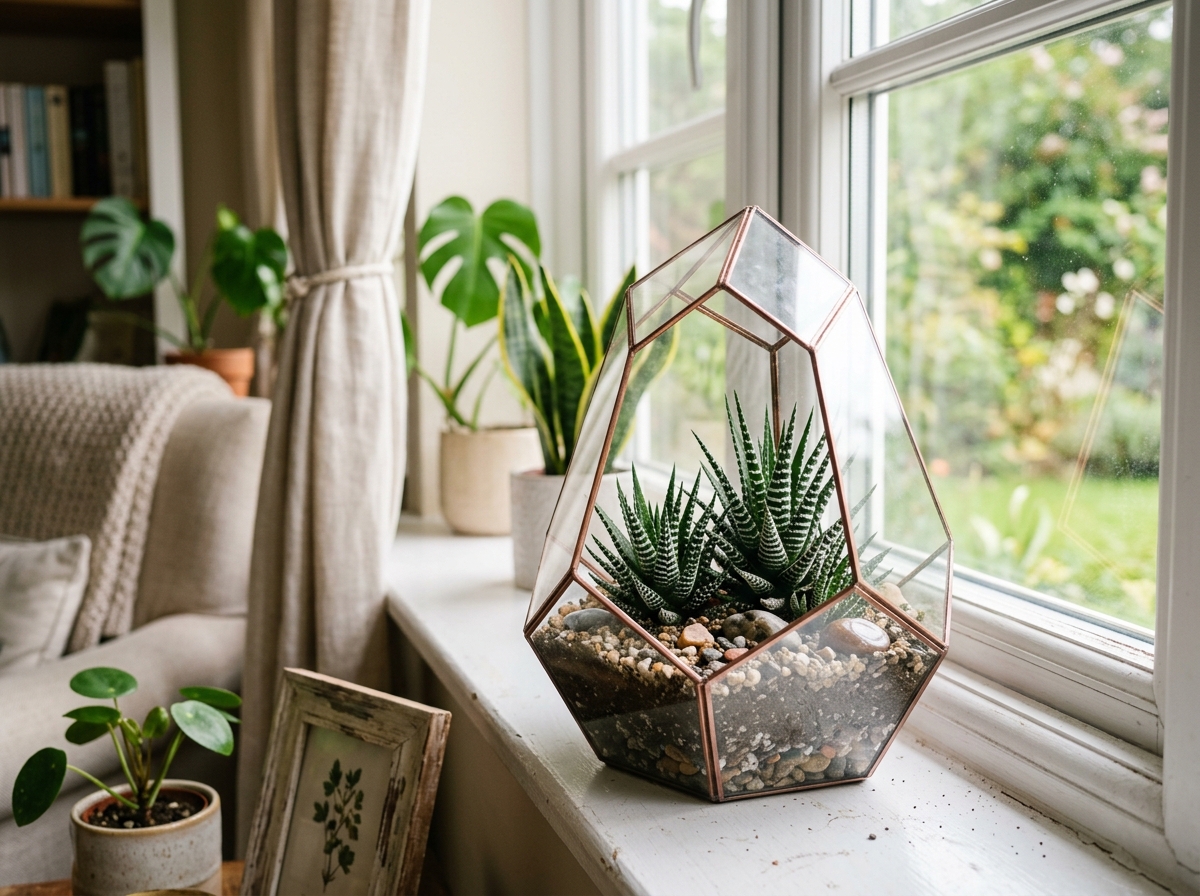
Identifying Haworthiopsis attenuata vs. fasciata
In the plant world, “Zebra Plant” is a bit of a catch-all term, but for the serious terrarium builder, the distinction between Haworthiopsis attenuata and Haworthiopsis fasciata matters. They are frequently confused, even by nurseries!
| Feature | Haworthiopsis attenuata | Haworthiopsis fasciata |
|---|---|---|
| Common Name | Zebra Haworthia / Zebra Plant | Zebra Haworthia / Zebra Cactus |
| Inner Leaf Surface | Bumpy (covered in white tubercles) | Smooth (no bumps on the inside) |
| Outer Leaf Surface | Prominent white stripes/bumps | Prominent white stripes |
| Availability | Very Common | Rare in general commerce |
| Growth Habit | Clumping rosettes | Clumping rosettes |
The easiest way to tell them apart is to feel the inside of the leaf. If it feels bumpy like the outside, you have an attenuata. If it’s smooth as silk, it’s a fasciata. Both are stunning, but attenuata is the one you will most likely find in your local shop or kit. For more botanical details, the North Carolina Extension Gardener Plant Toolbox is an excellent resource.
Ideal Substrate for Haworthia Terrarium Zebra Plants
The quickest way to kill a succulent in a glass container is to use the wrong soil. Standard potting soil holds onto moisture like a sponge, which leads to “wet feet” and eventually rot. We always recommend a gritty, well-draining substrate.
A high-quality cactus potting mix is a great start, but we like to customize ours for better airflow. A mix of 50% cactus soil, 25% perlite, and 25% coarse sand or fine gravel creates the perfect environment. The goal is a pH between 6.1 and 7.8—slightly acidic to neutral. This gritty texture allows the roots to breathe and ensures that water passes through quickly rather than sitting in stagnant pools. If you’re looking for the best base components, see our article on the best-soil-for-indoor-plants.
How to Water Your Haworthia Terrarium Zebra Plants
Watering a terrarium is an art form because most glass vessels don’t have drainage holes. We use the “soak and dry” method, but with a cautious twist. During the spring and summer (the active growing season), we water when the soil is almost completely dry—usually every 2 to 3 weeks.
In the winter, the plant enters a dormant phase. During this time, you can cut back watering significantly, sometimes only once a month or even every six weeks. A great trick is to use a wooden chopstick or a moisture meter to check the depth of the soil. If it comes out clean, it’s time for a drink. Always aim the water at the soil, not the center of the rosette. Water trapped in the leaves can lead to crown rot, which is often fatal. For more pro tips, visit our tips-for-healthy-houseplants page.
Key Features of High-Quality Zebra Haworthia Terrarium Kits
When shopping for a kit, don’t just look at the glass; look at the components. A high-quality kit for haworthia terrarium zebra plants should prioritize airflow and drainage. Because these succulents are prone to rot in stagnant air, we highly recommend open-top geometric glass containers or wide-mouthed bowls.
A “complete” kit should include:
- The Plant: Look for a firm, dark green Haworthia with no mushy leaves.
- Activated Charcoal: This is the “filter” of your terrarium. It helps remove toxins and prevents odors that can occur in standing water.
- Drainage Layer: Small river stones or clay pebbles (LECA) to create a reservoir at the bottom.
- Decorative Top Dressing: Polished pebbles or sand to keep the leaves off the damp soil and add aesthetic flair.
Choosing the right container is vital. While a closed jar looks cool, it’s a death sentence for a Zebra Haworthia due to the humidity. Stick to open systems. You can find more advice on vessel selection in our guide on best-pots-for-indoor-plants and easy-care-indoor-plants-for-beginners.

Step-by-Step Guide to Setting Up Your Zebra Plant Display
Ready to build? Setting up your display is a therapeutic process. Follow these layers for success:
- The Drainage Base: Start with a 1-2 inch layer of small rocks or pebbles. This is where excess water will sit so it doesn’t drown the roots.
- The Barrier: Some people use a thin mesh or a layer of dried moss here to keep the soil from washing down into the rocks.
- The Purifier: Sprinkle a thin layer of activated charcoal over the rocks.
- The Soil: Add your gritty cactus mix. Make a small well for your plant.
- Planting: Gently remove the Haworthia from its nursery pot, shake off the old soil, and place it in the well. Firm the soil around the base.
- Companion Plants: If your container is large enough, consider adding friends. Gasteria and Echeveria make excellent companions because they share similar light and water needs.
- The Finishing Touch: Add your decorative pebbles or sand.
For a deeper dive into the DIY process, we have several tutorials to help you out, including easy-diy-indoor-plant-terrariums-for-beginners, creating-your-own-indoor-plant-terrarium, and succulents-101-diy-mini-succulent-terrariums.
Troubleshooting Common Pests and Growth Issues
Even the hardiest plants have bad days. The most common pest you’ll encounter is the mealybug—tiny white, cottony insects that hide in the nooks of the leaves. If you spot them, don’t panic! A cotton swab dipped in isopropyl (rubbing) alcohol can be used to dab them away. For larger infestations, neem oil is a safe, organic alternative.
Fungus gnats are another nuisance, usually caused by soil that stays too wet. Letting the soil dry out completely and using yellow sticky traps can solve this. If you notice your plant looks “stretched out” with pale growth in the center, it’s experiencing etiolation—it needs more light immediately.
One of the coolest things about haworthia terrarium zebra plants is how they propagate. Over time, the mother plant will produce “pups” or offsets at the base. Once these are about an inch wide, you can gently snip them off, let them callus for a day, and plant them in their own tiny pots. It’s an endless supply of free plants! For a complete breakdown of pests, the Haworthia Fasciata Care Guide is a must-read.

Frequently Asked Questions
Is Haworthia Zebra toxic to cats and dogs?
No! This is one of the best features of the Zebra Haworthia. According to ASPCA guidelines, it is non-toxic to cats, dogs, and horses. While we don’t recommend letting Mr. Whiskers use it as a snack (it’s crunchy and probably tastes terrible), it won’t cause them harm if they take a nibble.
Can Zebra Haworthia survive in a closed terrarium?
We strongly advise against it. Closed terrariums create a high-humidity, high-moisture environment. Zebra Haworthias are desert-dwellers at heart; they need airflow and dry air. In a closed jar, they are highly susceptible to rot and fungal infections. Always choose an open-top vessel for your haworthia terrarium zebra plants.
Why are my Zebra Plant leaves turning red or brown?
If the leaves are turning a deep red or bronze, it’s usually “sun stress.” This isn’t necessarily a bad thing—many growers love the color—but it means the plant is at its limit for light. If the tips are turning crispy and brown, it could be a sign of very low humidity or underwatering. If the leaves are turning yellow and mushy, that is a classic sign of overwatering and root rot.
Conclusion
At FinanceBillX, we believe that gardening should be accessible to everyone, regardless of the size of their home or the busyness of their schedule. Haworthia terrarium zebra plants offer the perfect blend of architectural beauty and rugged durability. By following a simple “less is more” philosophy—less water, less direct sun, and less fuss—you can enjoy a stunning desktop ecosystem for decades.
As your plant grows and produces pups, you might find yourself needing to repot every 2 to 3 years to refresh the nutrients in the soil. When that time comes, don’t forget to share the love by gifting those offsets to friends! For more inspiration on your next green project, check out More DIY terrarium projects and care tips. Happy planting!
