
The Best Large Plants for Low Light (And Why Your Dim Apartment Needs Them)
The best large plants for low light are ones that grow tall and bold without needing a sun-drenched window. Here’s a quick rundown:
- Snake Plant – Up to 8 ft, near-indestructible, great air purifier
- Kentia Palm – Up to 10 ft, elegant, thrives in shade
- ZZ Plant – Up to 4 ft, drought-tolerant, virtually bulletproof
- Corn Plant (Dracaena fragrans) – Up to 6 ft, easy care, low water needs
- Parlor Palm – 2-6 ft, pet-friendly, tolerates dim corners
- Chinese Evergreen – 1-3 ft wide and tall, colorful, forgiving
- Rubber Plant – Up to 10 ft, bold leaves, tolerates partial shade
- Janet Craig Dracaena – Up to 8 ft, tough as nails, office-proven
- Monstera (Swiss Cheese Plant) – 3-8 ft, dramatic foliage, easy grower
- Umbrella Tree (Schefflera) – Up to 10 ft, fast-growing, striking
Most urban apartments don’t get great light. North-facing rooms, deep corners, hallways with no windows – these spaces feel lifeless without greenery, but most plants struggle there.
The good news? You don’t need a greenhouse or a south-facing window to have a stunning indoor jungle.
“Low light” doesn’t mean no light. It means indirect or filtered light – think spots 6-8 feet from a window, rooms with sheer curtains, or north-facing spaces. Many large tropical plants evolved on forest floors beneath dense canopies, so they’re built for exactly these conditions.
And if you’re worried about keeping them alive? Some of these plants are almost impossible to kill – the Cast Iron Plant literally got its name for that reason.
Whether you want a 10-foot Kentia Palm anchoring your living room or a bold Rubber Plant softening a dark corner, there’s a large low-light plant that fits your space, your lifestyle, and even your pets.

What Defines the Best Large Plants for Low Light?
When we search for the best large plants for low light, we aren’t just looking for something that survives; we want a plant that makes a statement. In interior design, these are often called “floor plants.” They anchor a room, soften hard architectural lines, and bring a sense of scale to your living space.
However, “low light” is a term that is frequently misunderstood. Scientifically, most plants require some form of light to perform photosynthesis. In a home setting, low light typically refers to:
- North-facing rooms: These rooms receive consistent but weak light throughout the day.
- Deep corners: Areas located more than 6 to 8 feet away from a window.
- Filtered light: Light that passes through sheer curtains or is blocked by outdoor obstructions like trees or neighboring buildings.
Understanding indoor plant sunlight requirements is the first step to becoming a successful “lazy gardener.” In low-light environments, growth rates naturally slow down. This isn’t necessarily a bad thing! A slower growth rate means your plant won’t outgrow its designated corner in a single season, making it much easier to manage.
When space planning for these giants, consider the mature size. A Kentia Palm can reach 10 feet, while a Corn Plant might top out at 6 feet. Acclimatization is also key; when you bring a large plant home, it may drop a few leaves as it adjusts to the lower light levels of your house compared to a bright nursery. Choosing low-maintenance indoor plants ensures that even if you forget a watering session, your green roommate won’t hold a grudge.
Top 10 Large Low-Light Plants for Your Home
Finding the right fit depends on your aesthetic and your commitment to care. Below is a quick comparison to help you decide which giant belongs in your corner.
| Plant Name | Max Indoor Height | Care Level | Pet Safe? |
|---|---|---|---|
| Snake Plant | 3–8 ft | Beginner | No |
| Kentia Palm | 10 ft | Easy | Yes |
| ZZ Plant | 3–4 ft | Beginner | No |
| Corn Plant | 6 ft | Easy | No |
| Rubber Plant | 6–10 ft | Moderate | No |
| Parlor Palm | 2–6 ft | Easy | Yes |
| Chinese Evergreen | 3 ft | Beginner | No |
| Monstera | 8 ft | Moderate | No |
| Janet Craig Dracaena | 8–10 ft | Easy | No |
| Umbrella Tree | 10 ft | Moderate | No |
The Powerhouse Performers
The ZZ Plant (Zamioculcas zamiifolia) If you are the type of person who forgets a plant exists for a month, the ZZ plant is for you. It features waxy, deep green leaves that reflect what little light is available. It stores water in thick rhizomes beneath the soil, making it incredibly drought-tolerant. It grows slowly but can reach a respectable 3 to 4 feet in height, making it a perfect mid-sized floor plant for a dim office or basement.
Corn Plant (Dracaena fragrans) The Corn Plant looks like a small indoor tree with its thick woody canes and fountain-like leaves. It can reach up to 6 feet tall indoors. It is remarkably forgiving and thrives in “light shade.” If you notice the leaf tips turning brown, it might be sensitive to the fluoride in your tap water—a common quirk of the Dracaena family.
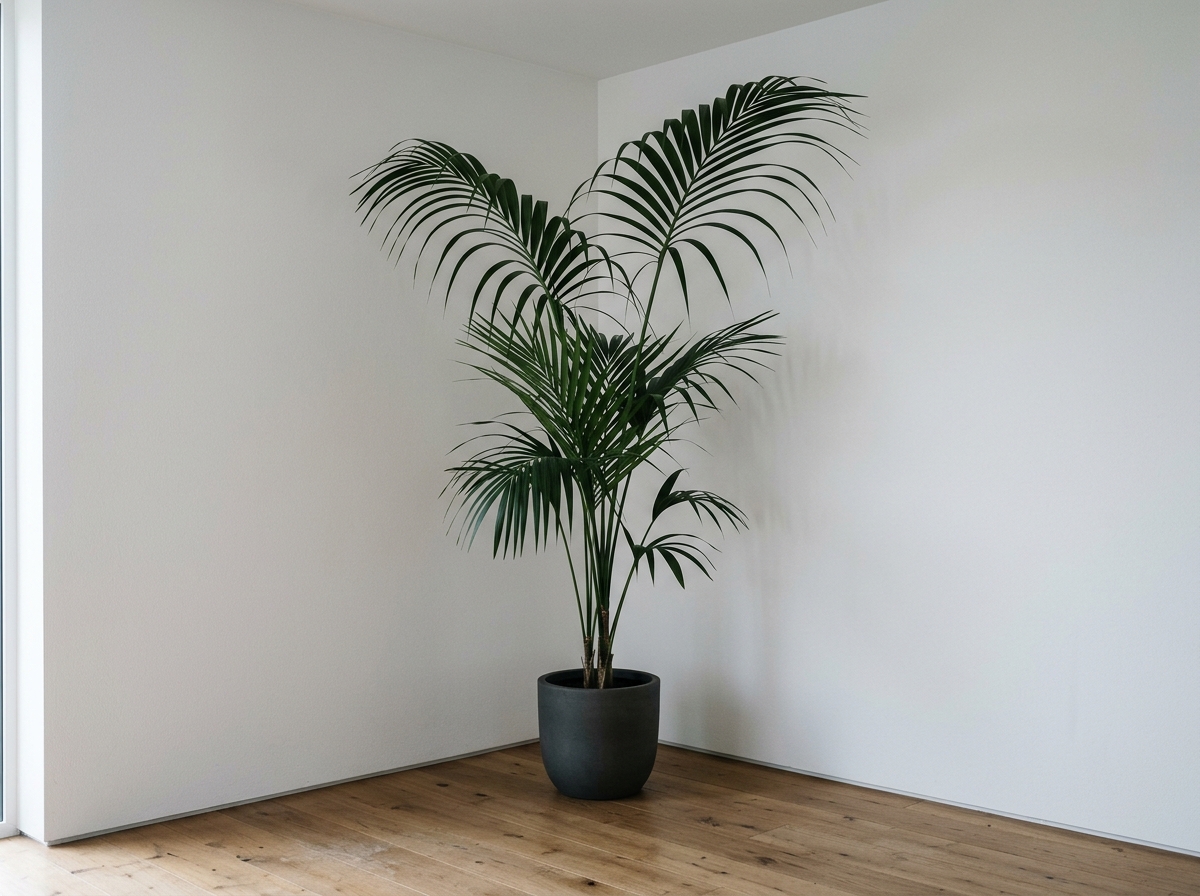
Kentia Palm (Howea forsteriana) For those looking for true height and elegance, the Kentia Palm is the gold standard. It can grow to around 10 feet tall indoors. Unlike many other palms that demand high light, the Kentia is perfectly happy in a shady corner. It is a slow grower, so we recommend buying a mature specimen if you want that “instant jungle” look.
Chinese Evergreen (Aglaonema) While often thought of as a smaller plant, certain varieties can grow 3 feet tall and wide. They are famous for their variegated leaves, which can feature silver, pink, or cream patterns. They are excellent at brightening up dark corners where a solid green plant might disappear into the shadows.
Parlor Palm (Chamaedorea elegans) A classic since the Victorian era, the Parlor Palm is one of the few large plants that is completely non-toxic to cats and dogs. It grows between 2 and 6 feet tall and handles low light with grace. It prefers slightly more consistent moisture than the Snake Plant but is otherwise very low-maintenance.
Rubber Plant (Ficus elastica) While many Ficus varieties (like the Fiddle Leaf Fig) are notoriously finicky, the Rubber Plant is much heartier. It can grow up to 10 feet tall, though most indoor versions stay around 6 feet. Its thick, rubbery leaves are excellent at capturing filtered light. Just be sure to wipe the dust off the leaves so they can “breathe” properly.
Janet Craig Dracaena Commonly called the “interior workhorse,” the Janet Craig is a favorite for professional offices. It features dark green, sword-shaped leaves and can reach 8 feet in height. It is incredibly tolerant of air conditioning, drafts, and low light, making it one of the most resilient giants on our list.
Why the Snake Plant is one of the Best Large Plants for Low Light
The Snake Plant (Sansevieria) is arguably the king of the best large plants for low light. While many people think of them as small desk plants, certain varieties, such as Sansevieria laurentii or Sansevieria zeylanica, can grow up to 8 feet tall under the right conditions.
What makes them special?
- Air Purification: A famous NASA Clean Air Study voted the Snake Plant as one of the best air-purifying plants. It is unique because it continues to produce oxygen at night, making it one of the most popular bedroom plants as an unorthodox air purifier.
- Drought Tolerance: You can practically ignore this plant for weeks. It prefers its soil to dry out completely between waterings, making it a “lazy gardener’s” dream.
- Vertical Growth: Unlike many large plants that spread horizontally and take up floor space, the Snake Plant grows straight up. This makes it ideal for narrow corners or small apartments.
- Adaptability: It can survive in virtually no natural light (though it will grow faster with a little bit of indirect sun). If you have a room with no windows, this is your best bet, provided you leave the lights on for a few hours a day or use a grow light.
For more on how to use these in your sleeping space, check out our guide on the best bedroom air purifying plants and how to place them.
Growing the Monstera as one of the Best Large Plants for Low Light
The Monstera adansonii and Monstera deliciosa (Swiss Cheese Plant) are iconic for their large, heart-shaped leaves with natural holes called fenestrations. While they prefer bright indirect light, they are surprisingly adaptable to lower light levels.
In a dim room, a Monstera might grow more slowly and produce fewer holes in its leaves, but it will still thrive as a lush, green giant. These plants have a climbing habit and produce aerial roots that look for something to grab onto. To help your Monstera reach its full potential of 3 to 8 feet, we recommend using a moss pole. This mimics the trees they climb in the wild and encourages larger leaf growth.
Because they are so hardy, they are frequently recommended as easy-care indoor plants for beginners. Just remember that they love humidity—if your home is dry, a quick misting or a pebble tray can go a long way.
Essential Care and Maintenance for Indoor Giants
Caring for a large plant is slightly different than caring for a small succulent. Because they have more soil volume, they hold onto water longer, which can be a blessing or a curse.
Soil and Potting Large low-light plants need well-draining soil. A mix containing peat moss, perlite, and perhaps a bit of orchid bark ensures that the roots stay aerated. Always ensure your pot has drainage holes. Without them, water pools at the bottom, leading to the dreaded root rot.
Watering Schedules The number one mistake people make with low-light plants is overwatering. Since the plant isn’t getting blasted by the sun, it doesn’t process water as quickly. Always check the top 1–2 inches of soil with your finger. If it’s damp, wait. For plants like the Snake Plant or ZZ Plant, you should wait until the soil is almost entirely dry.
Humidity and Temperature Most of these giants are tropical natives. They prefer temperatures between 60°F and 80°F. While they can tolerate standard home humidity, some (like the Alocasia or Peace Lily) will show their displeasure with brown, crispy leaf edges if the air is too dry. If you’re struggling with a finicky giant, you might find our tips on caring for peace lily indoors helpful, as many of those principles apply to other large tropicals.
Maintenance Tips
- Leaf Cleaning: Large leaves are dust magnets. A layer of dust blocks sunlight and prevents the plant from photosynthesizing efficiently. Wipe leaves once a month with a damp cloth.
- Fertilizing: In low light, plants don’t need much food. Using simple fertilizer sticks once or twice a year during the spring and summer is usually plenty.
- Rotation: Large plants tend to lean toward the light source. Rotate your pot a quarter-turn every time you water to keep the growth even.
Troubleshooting Common Issues in Dim Spaces
Even the best large plants for low light can run into trouble. Here is how to spot and fix common problems:
- Yellowing Leaves: This is the universal sign of overwatering. If the leaves feel soft or mushy, let the soil dry out completely and reduce your watering frequency.
- Leggy Growth: If your plant is stretching out with long gaps between leaves, it’s “reaching” for light. Move it a few feet closer to a window or supplement with a grow light.
- Pests: Spider mites and mealybugs love dusty, dry plants. Regularly wiping leaves and using neem oil can keep these at bay.
- Fluoride Sensitivity: Plants like the Janet Craig Dracaena are sensitive to chemicals in tap water. If you see brown tips on the leaves, try using distilled water or rainwater.
- Root Rot: If your plant smells like compost or is wilting despite wet soil, it likely has root rot. You may need to repot it in fresh soil and trim away any black, slimy roots.
For those looking for a plant that is particularly resilient against these issues, the Bamboo Palm is a fantastic alternative. Learn why bamboo palm is an indoor plant hero for more details on its hardiness.
Frequently Asked Questions about Large Low-Light Greenery
Can these plants survive in rooms with no windows?
The short answer is: not forever. All plants need some light for photosynthesis. However, many “low light” plants can thrive under standard office fluorescent lighting. If you have a windowless room, you can successfully grow a Snake Plant or ZZ Plant if you keep the overhead lights on for 8–10 hours a day. For better results, invest in a small LED grow light. This allows the plant to survive and thrive rather than just slowly fading away. You can find more suggestions in our list of air purifying plants for your bedroom.
Which large low-light plants are safe for pets?
Many popular low-light plants, like the Monstera and Snake Plant, contain calcium oxalate crystals. If chewed, these can cause irritation and swelling in pets. If you have a curious cat or dog, stick to these non-toxic giants:
- Parlor Palm
- Kentia Palm
- Spider Plant (Can be grown large in hanging baskets)
Always check a reliable database like the ASPCA if you are unsure. Interestingly, while peace lilies and their contribution to better air quality are well-documented, they are also plants you should keep out of reach of pets.
How do I stop my large plant from outgrowing its space?
If your Rubber Plant is hitting the ceiling, don’t panic! Most large plants handle pruning well. You can trim the top of a Rubber Plant or Dracaena to encourage it to branch out horizontally rather than growing taller. Additionally, keeping a plant “root bound” (leaving it in a slightly smaller pot) can naturally slow its growth rate.
Conclusion
Creating an indoor oasis doesn’t require a degree in botany or a house made of glass. By choosing the best large plants for low light, you can transform even the dimmest corner into a lush, living masterpiece. From the architectural height of the Kentia Palm to the air-purifying prowess of the Snake Plant, these giants offer more than just aesthetic value—they improve our air quality and our mental well-being.
At FinanceBillX, we believe that sustainable decor is one of the best investments you can make for your home. Whether you are a “lazy gardener” or a budding enthusiast, mastering the art of low-light greenery is a rewarding journey. Ready to turn your home into a sanctuary? Start your indoor jungle today and experience the benefits of living with nature.
